Blog

  • Zabov all’uovo

    zabov all'uovo

    Zabov all’uovo is a traditional Italian eggnog made with milk, fresh egg yolks, sugar, and a little alcohol (it’s only 15% ABV). It has a brandy flavour. It’s a sweet, energising liqueur, taken warm as a tonic, or any time for a celebration. It is also sometimes used as a complement for gourmet desserts.

    In 1946 a young merchant from Ferrara, driven by a passion for novelty, courageously decided to abandon the tranquillity of his family’s own business to undertake an entrepreneurial project and set up Distillerie A.R.P.A. di Mauro Moccia sas, a company “to produce and sell liqueurs, syrups and related products”.

    From March 2011 this ferrarese liquor was added to the official list of traditional products of the Emilia-Romagna region.

    Source: Ferrara: Terra e Acqua: Zabov – Zabaglione Egg Liquor

    It’s the Italian version of the better-known Dutch advocaat.

  • Abondance

    photo of Abondance cheese

    Abondance (also called Tomme d’Abondance) is a semi-hard, fragrant raw milk cheese produced in Chablais, Haut-Savoie, in south-eastern France. It’s made from milk from Abondance cows, which is how it got its name. It must be aged for a minimum of three months on specially prepared spruce boards.

    Abondance cheese was granted Appellation d’origine contrôlée (AOC) status in 1990.

  • Watercress

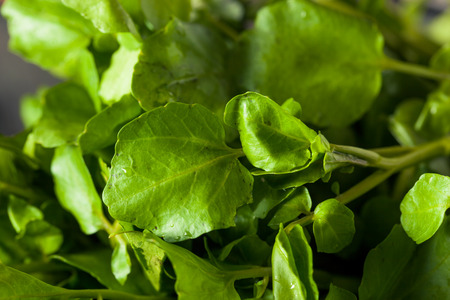
    photo of watercress

    Watercress is a close relative of the nasturtium and also related to mustard. It’s cultivated for its green, peppery-tasting leaves. It’s commonly used in salads or in soup. It makes a nice edible garnish too.

  • Greek salad

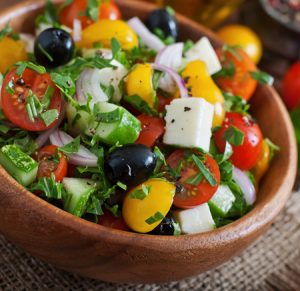
    photo of Greek salad with feta cheese and black olives

    Greek salad is a fresh and simple salad consisting of tomatoes, cucumber, olives and feta cheese, often enhanced with various herbs.

    In Greece it’s called khōriattikisalata, which means ‘country-Attic salad’; it’s named after Attica, an area encompassing Athens.

  • Gravadlax

    Marinated salmon served on a mousse and salad bed


    Gravadlax, also known as gravlax, is a Scandinavian dish consisting of fresh, raw salmon fillet marinated with salt, sugar and dill. Once cured, it’s sliced thinly. It originated as a means to preserve fish in the days before refrigeration. The fish was prepared with salt and dill and then buried in the ground. (‘Grav’ is Swedish for ‘grave’ or ‘pit’. ‘Lax’ is Swedish for ‘salmon’.)

    These days it can easily be made at home in the fridge. Using beetroot in the cure has become fashionable and gives the salmon an interesting colour. The Not Delia website has a delicious take on this using a fresh orange, honey and soy sauce.

    Not Delia: Marinated salmon

  • Bhaji

    http://www.notdelia.co.uk/images/recipes/indian/onion-bhajis.jpg

    A bhaji, sometimes called ‘bhajia’, is an Indian snack. It’s a vegetable fritter. For example, you could have cauliflower bhajis, aubergine bhajis or, the most common in British Indian cuisine, onion bhajis.

    The word ‘bhaji’ is Hindi for ‘vegetable’.

    It’s easy to make by slicing the vegetables and coating them in a batter of gram flour and spices, then deep frying.

    Bhajis are usually served with a dip as part of an Indian meal or a starter.

    More information

    Not Delia: How to make onion bhajis

  • Asparagus

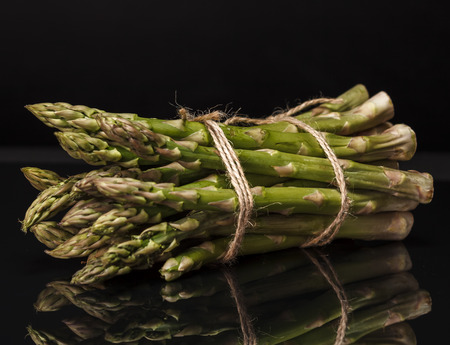
    photo of a bunch of asparagus spears

    Asparagus, a herbaceous perennial plant, is generally considered to be a luxury vegetable. Quite simply, it’s expensive to buy because it’s expensive to cultivate. A newly planted asparagus plant takes three years to produce spears that are good enough to sell. Then it will only produce spears for a further three years. Therefore, a typical asparagus field will only give a yield for half of the time. Additionally, asparagus requires a lot of land as each square foot will only produce about one spear. And then these spears have to be harvested manually as there’s yet no way to harvest them mechanically.

    Asparagus is graded by size, the ‘sprue’ being the slimmest and ‘jumbo’ the thickest.

    Most countries eat white asparagus and this is even more expensive to cultivate as the spear must be shielded from the light.

    White asparagus is a peculiar thing. I think so, but then I’m in a minority. I’m used to the green stuff, and I find white asparagus low in both texture and flavour. It is only in Britain, Italy and parts of the USA that eat their asparagus green. The rest of the world, and that includes most of Europe, eats it white. To keep it white, you have to build up the soil around it as it grows, keeping it underground and out of the light. You prepare the white as you do the green.

    Source: Gregg Wallace: Veg – the greengrocer’s cookbook

    Asparagus is a spring vegetable, and available in Britain from about May to July. Imports are available all year round but many people consider that locally grown veg tastes better than any which have flown half-way round the world.

    Asparagus which is limp is past its best; the spears should be firm with smooth skin, and the heads (what some call tips) tightly closed. Asparagus requires very little cooking – the simpler the better – just boil, steam or griddle. It can also be eaten raw but cooked briefly is better.

  • Water chestnut

    Whole unpeeled fresh water chestnuts on a plate

    The water chestnut (sometimes called Chinese chestnut) is not a nut at all. It’s an aquatic vegetable that grows, under water, in marshes.  It’s native to Asia, and is grown in many countries for its edible corms (swollen underground plant stems, like tubers).

    Most of us in the West will only ever have seen the tinned version of these, which is readily available in supermarkets. And if you’ve eaten water chestnuts in Britain, it’s likely to have been in a Chinese restaurant.

    The crunchy, white flesh of the small, rounded corms is good sliced up in Chinese food as it adds a nice texture to the dish. They’re most often steamed or stir-fried and served in dishes with rice or noodles.

    More information

    Not Delia: Fresh water chestnuts

  • Guacamole

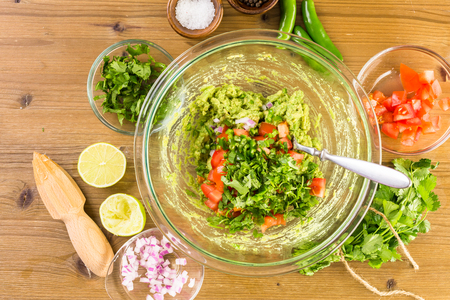
    photo of guacamole and ingredients

    Guacamole is an avocado-based dip or salad. It was first created by the Aztecs in what is now Mexico. As well as its use in modern Mexican cuisine, it’s widely eaten throughout the UK, North America and Australia and other countries. Israel, where avocados are widely grown, has its own version called ‘salat avocado’.

    Traditionally guacamole – which means avocado sauce – is made by mashing ripe avocados with sea salt in a mortar and pestle. Additional ingredients such as tomato, onion, garlic, chilli, coriander (cilantro) and lime juice are often added.

    These days commercially prepared guacamole is easily available from supermarkets thanks to packaging and processes which extend its shelf life.

  • Pomegranate

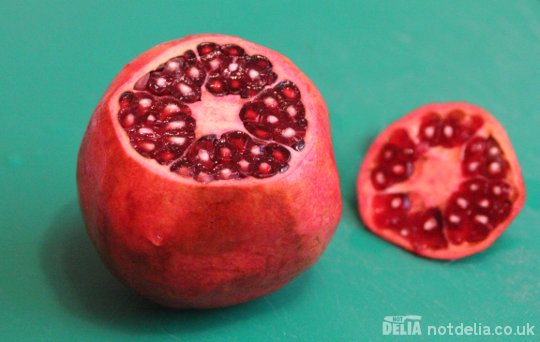
    A topped and tailed pomegranate

    Pomegranates originate from Persia, but are now mainly grown in Spain, the Middle East, and America.  They’re round, about the size of an apple, with a hard, shiny, red skin, which is inedible. Inside the fruit you’ll find countless little edible seeds, each of which is contained in a jewel-like sac of sweet juice. The sacs are packaged in a bitter, inedible pith so to prepare the pomegranate you’ll need to get rid of the pith.

    Pomegranate is mostly used in salads, especially in the Middle East, or as a garnish to decorate meat dishes. Alternatively, you could eat it straight from the shell using a cocktail stick to extract the juice sacs. It’s considered by some to be a ‘superfood’ as it’s highly nutritious.

    More information

    Not Delia: How to prepare a pomegranate