Blog

  • Aiguillette

    Aiguillette is French and the word literally means ‘little needle’. In culinary terms it refers to a long, thin sliver of the choicest, most tender meat from either side of the breastbone of a duck or other fowl. It’s sometimes used to describe any thin strip of meat taken from a premium cut, such as from the rump or flank.

    The term is also used to denote certain sartorial ornamentation, especially on military uniforms.

  • Celeriac

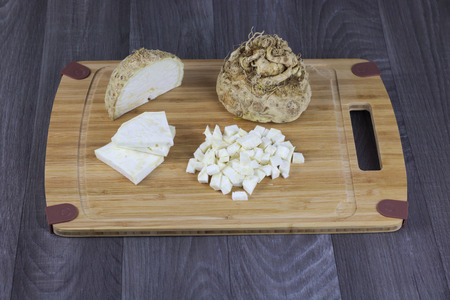
    photo of celeriac, whole, sliced, diced

    What is it?

    Celeriac is a relative of celery, cultivated for its edible roots.

    It’s often described as being ugly and sometimes as the unsung hero of the vegetable world.  It’s an oddly-shaped, knobbly, root vegetable which has a subtle, celery-like flavour, with nutty overtones.

    It’s available all year round but best in the colder months, ie September to April in the UK.

    What to do with it

    It’s can be used instead of potato in many dishes – it can be cooked in the same way – plus it can be eaten raw in salads. The French are particularly noted for their rémoulade, a salad of which finely grated celeriac is the main ingredient.

    It’s less well-known outside France but other typical dishes include using it as a mash, sometimes combined with mashed potatoes, in soups, or anywhere else where the use of root vegetables is appropriate.

    Recipe

    Try Not Delia’s celeriac and potato mash and celeriac dauphinoise.

  • Advocaat

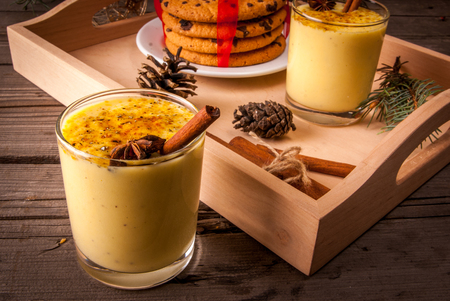
    photo of a Christmas scene with eggnog

    Advocaat is a Dutch eggnog, made from egg yolks, sugar and brandy. It’s a rich and creamy drink with a custard-like flavour.  The drink has a low alcohol content, typically between 14% and 20% ABV.

    In Dutch its name is short for advocaatenborrel, the ‘lawyer’s drink’, from advocaat, ‘advocate, lawyer’, and borrel, ‘drink’.

    Advocaat was the main ingredient in the cocktail “Snowball” which was popular in the 1960s. Nowadays eggnog is more typically served at celebrations, eg Christmas.

    See also the Italian version which is called Zabov Ull-uovo.

  • Soda bread

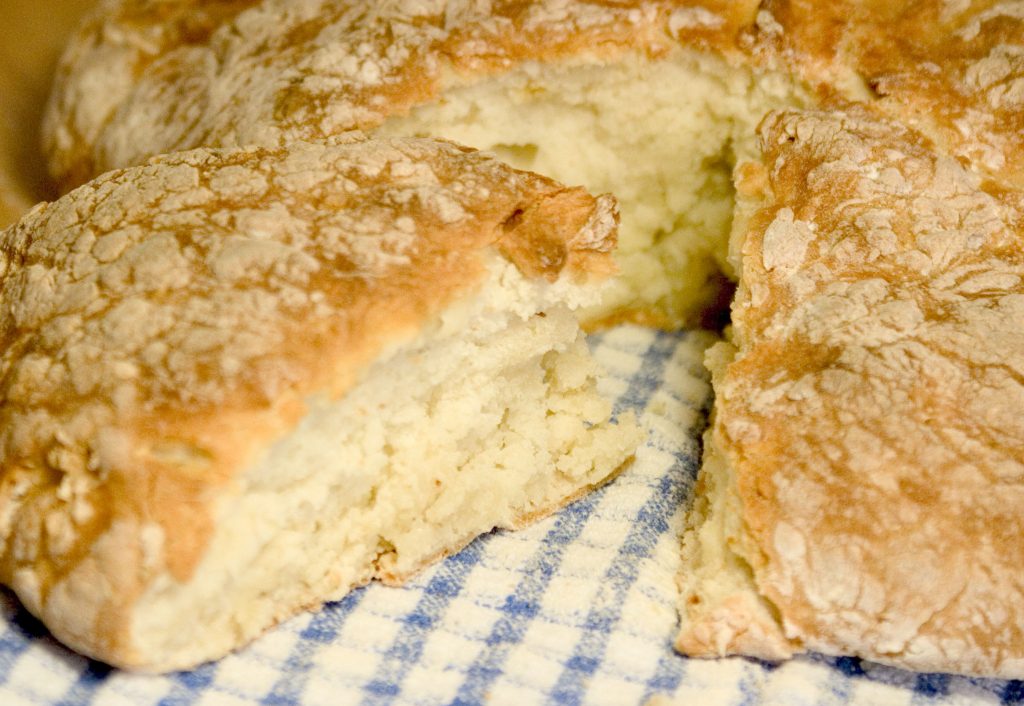
    photo of Irish soda bread

    Soda bread is a variety of quick bread traditionally made in a variety of cuisines in which sodium bicarbonate is used as a leavening agent instead of yeast.  Irish soda bread in particular is very popular in Britain as well as Ireland.

    It also uses very few ingredients, ie flour, salt, bicarbonate of soda, and buttermilk.

    Recipes

    Try Not Delia’s soda bread which takes only two or three minutes to make and 20-30 minutes to bake.

    Trish’s Kitchen shows how to make Irish soda bread using whole wheat flour.

  • Brussels sprouts

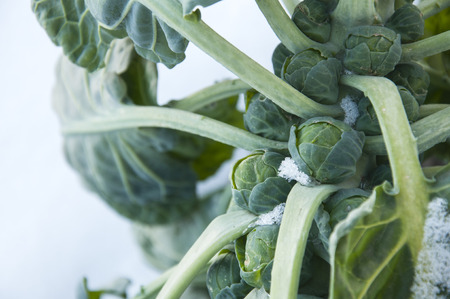
    photo of Brussels sprouts in a snowy field

    What are they?

    Brussels sprouts are like miniature cabbages which grow in multiple rows on a thick central stalk.

    The sprout is obviously a brassica, but it’s anybody’s guess when somebody mutated it from its original cabbage. I believe sprouts originated in Belgium, where they were sold in markets as early as the 13th century (they didn’t appear in England or France until the end of the 18th century). But most Belgians believe sprouts to be Italian in origin. We know that sprouts were mentioned in Belgian market regulations in 1213. The earliest French record I can find is an order for a wedding feast of the Burgundian court in the 15th century. We have no English recipes until the 19th century.

    Source: Gregg Wallace, Veg – the greengrocer’s cookbook

    What to do with them

    Many people associate Brussels sprouts with Christmas, it’s certainly a winter veg. They’re best between October and March in the UK. Many people, especially children, dislike sprouts because of their bitter taste. Perhaps this explains the British tradition of boiling them to death. It’s sometimes joked that October is the time to put the sprouts on to boil for Christmas. It’s fair to say that they’re an acquired taste. However, modern varieties have been bred to reduce the bitterness, and are often sweet and nutty, so if you have unhappy memories of eating sprouts as a child, it might be worth your while to give them another try.

    Another traditional British thing was to cut a cross in the base of the sprout. This will also lead to a mushy sprout. Instead cut the larger ones in half vertically.  Sprouts should ideally be served with a bit of bite still in them. Three or four minutes boiling should suffice. Serve with a knob of butter.

    The tops of the plants can also be eaten. They’re just like cabbage leaves after all –  cook them as you would spring greens.

    Recipe

    Christmas dinner made easy

  • Broccoli

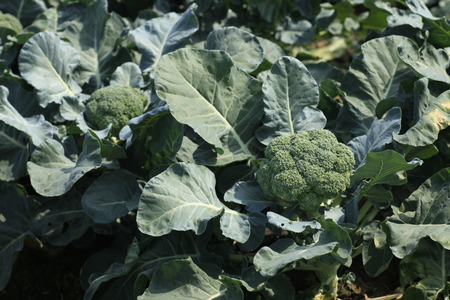
    photo of broccoli in the field

    What is it?

    Broccoli is a brassica, part of the cabbage family, as is it’s close relative the cauliflower.

    There are three types of broccoli:

    Calabrese

    This is the one with the thick stem and big clustery heads (pictured above). Calabrese is named after the Italian region it originates from, Calabria. It’s the most commonly used broccoli in Britain.

    Calabrese broccoli is available all year round in the UK but best between the end of July and the end of October.

    Sprouting

    This broccoli has thinner stems and a few sprouting heads on each stalk.

    Sprouting broccoli is best between January and May.

    Tenderstem

    This relative newcomer has a thin main stem with one head on the top.

    What to do with it

    Choose firm, bright green undamaged heads. Avoid any plants with signs of yellowing – they’re past their best. Cook it soon after purchase as it doesn’t last long, maybe three days, even in the fridge. If you must store it, keep it wrapped as it deteriorates more quickly when in contact with the air.

    Wash and cut the calabrese broccoli into florets first. Broccoli can be boiled, steamed or stir-fried. It doesn’t need long cooking. For example, depending on the size of floret, it can be boiled or steamed in about three minutes.

  • Bulgogi

    photo of bulgogi

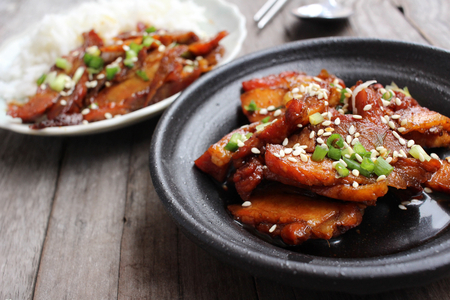
    Bulgogi is a classic Korean dish made from strips of meat – usually beef or pork – marinated in a spicy sauce and then cooked on a special ridged grill plate.

    This is probably one of the most well-known Korean meat dishes outside Korea. It literally means ‘fire’ (bul) and ‘meat’ (gogi) and these are marinated in a sesame and soy-based paste. Originally the meat was barbecued over an open flame but these days it’s quite common to see induction ‘BBQ’ grill pans in Korean restaurants.

    Of course, you can make your own bulgogi paste but there are also some commercial, delicious bulgogi marinades available. If your local supermarket doesn’t stock it, then try an Asian supermarket or buy online. If buying, rather than making, look for a high fruit content in the ingredients as the extra pears in the marinade will enhance the dish.

    Recipe

    Sainsburys Magazine: Bulgogi

  • Aubergine (Eggplant)

    30999842 - one purple eggplant isolated on white background

    What is it?

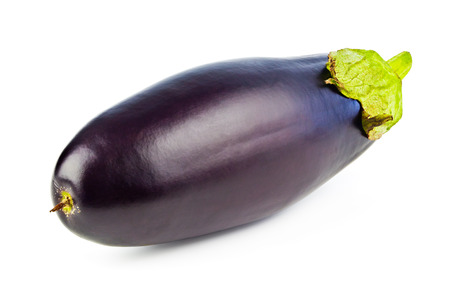
    It’s a fruit which is used as a vegetable. It comes in a wide variety of shapes, sizes and colours, ranging from the large, glossy, almost-black purple example above to the ‘pea aubergine’ which is popular in Thailand. The pea aubergine looks like a green pea, which in  Britain is sometimes used as a substitute for pea aubergines if they’re hard to source. The Thais also use a variety commonly known as ‘golf ball’ aubergines – for obvious reasons.

    Aubergines are widely used in Mediterranean cookery in dishes such as baba ganoush, ratatouille and moussaka.

    Traditionally, aubergines were salted prior to cooking to remove the bitterness. However, it’s not necessary today as modern varieties have had the bitterness bred out of them. That said even modern aubergines can become bitter with age, so if you’re forced to use an old aubergine, then you probably should salt it first. The exception to the ‘don’t salt it’ rule is if you’re going to fry the aubergines in oil. Aubergines cooked in such a way will be like a sponge and soak up a huge amount of oil – salting helps to prevent this.

    Recipes

    Yottam Ottelenghi’s Baba Ganoush

    Jamie Oliver’s Classic Ratatouille

    The Guardian – How to cook perfect moussaka

    Not Delia’s Thai Green Curry With Pork (or Chicken)

  • Absinthe

    Absinthe

    NOLA collection poster of absinthe
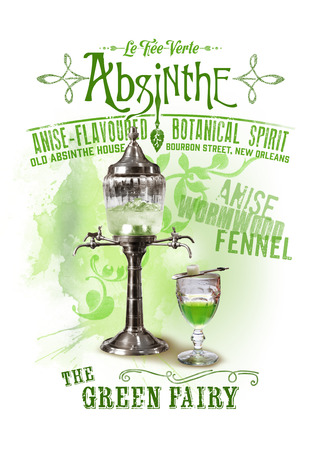
    Absinthe is an unsweetened green liqueur with a taste of anise, flavoured with botanicals, primarily oil of wormwood. The oil is bitter, and contains the poison thujone – which has led to absinthe’s notoriety.

    The drink became very popular in France in the 19th century, but it is said that many suffered from hallucinations, seizures, or death from excessive drinking of absinthe. It was banned in many countries. Absinthe can be purchased legally in Britain.

    Absinthe was typically served by balancing sugar cubes on a special spoon and pouring ice cold water over the sugar cubes into the drink.

    Another anise-flavoured drink, pastis, has since taken absinthe’s share of the market. Indeed, a certain Monsieur Pernod purchased the original absinthe recipe in 1797 from its creator, Dr Ordinaire. That drink is also usually served diluted with water, at which time the clear liquid becomes cloudy and opaque.

    Absinthe’s reputation in the nineteenth century was akin to that of illegal drugs in the late twentieth century. The painter Manet depicted this in his famous painting The Absinthe Drinker (1859), in which a dejected devotee stares gloomily at the cloudy liquid in his glass.

    Absinthe has several nicknames, including ‘la verte’ (the green one) and ‘the green fairy’ (a reference to its alleged hallucinogenic properties).

    The poster above depicts these many aspects of absinthe.
  • Ackee

    water colour painting of tropical blighia sapida fruit, ackee tree,

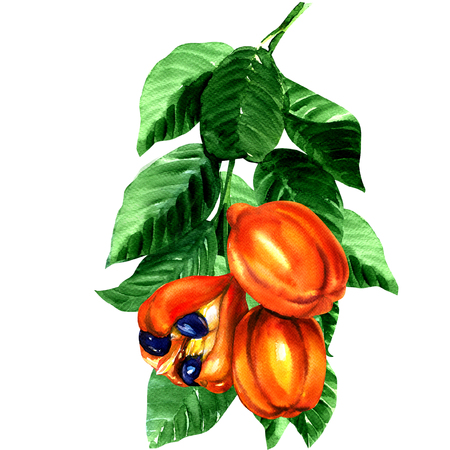
    Ackee, sometimes called ‘akee’, is the red, pear-shaped fruit of a tropical African tree. It’s related to the lychee and the longan. The fruit is very popular in Caribbean cuisine – it’s the national fruit of Jamaica – and is thought to have first arrived from Africa via a slave ship. It was later imported to Kew Botanical Gardens from Jamaica by Captain William Bligh of the Bounty in 1793.

    When it ripens, it turns from green to a bright red to yellow-orange, and splits open to reveal three large, shiny black seeds, each partly surrounded by soft, creamy or spongy, white to yellow edible flesh—the aril. The fruit is toxic before it ripens and should not be eaten.

    Canned ackee is available from some supermarkets and Afro-Caribbean grocers. Although technically a fruit, it’s usually served as a vegetable, commonly as an accompaniment to salt fish, but see below for a recipe by Levi Roots.

    Recipe

    Steak, peppers and tomatoes with ackee and mushrooms