Author: Scoffo

  • Bay leaf

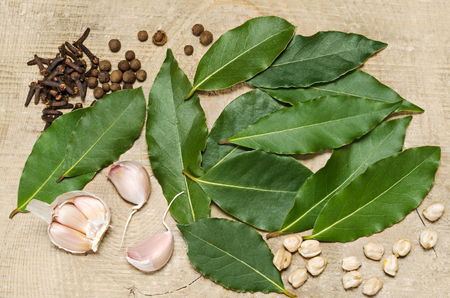
    Photo of fresh bay leaves along with some spices

    Bay leaves are the aromatic leaves of several plants, especially the bay laurel, which are used in cooking. They are used to add fragrance and flavour to a wide variety of dishes in Europe, the Americas, and in Asia, particularly stocks and stews. They help to add a good depth of flavour. The leaves are usually added whole and removed at the end of the cooking process.

    Some laurel plants, which may have leaves which look similar to edible bay leaves, are poisonous to humans and livestock – so if you are growing your own rather than buying a commercially available brand, then take great care that you have the right plant! Leaves sold commercially are usually dried prior to packaging.

    Bay leaves are also said to be useful for repelling vermin, eg cockroaches and mice, if scattered around in the pantry.
  • Vinegar

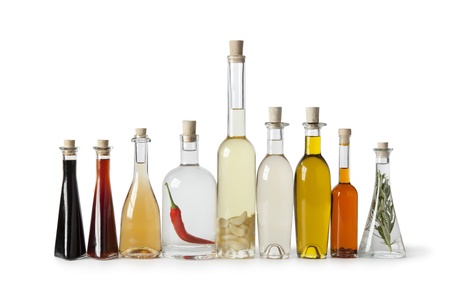
    various bottles of oils and vinegars

    Vinegar literally means ‘sour wine’ and it was originally produced by the acetic fermentation of wine.  Whilst there is some evidence that it existed in Britain in pre-Roman times, it was the Romans who introduced it more fully. The Romans were very keen on it as a condiment, for cooking and even – well watered down – as a drink.

    When wine was not available, vinegar was made from other ingredients, such as ale. This is the origin of malt vinegar, which is so popular in Britain especially on fish and chips. This is unsurprising in a country without lemons.

    Despite the ubiquity of malt vinegar in Britain, in recent decades there has been a greater interest in a wider variety of wine vinegars, including those flavoured with herbs and spices.

    These days the most common culinary uses of vinegar is as a cooking ingredient (eg for vinaigrette), for pickling, and as a condiment.

    In addition to its culinary uses, vinegar has also had various other roles to play in industry, medicine and the household, such as for cleaning and disinfecting.

    More information

    See also Balsamic Vinegar for more details about the artisan vinegar from Modena, Italy.

  • Adzuki bean

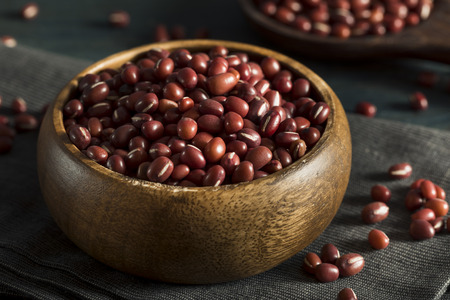
    photo of raw, organic, red aduki beans in a bowl

    The adzuki bean originates from Japan and is sometimes also called azuki, aduki, or red mung bean in English. The bean is also commonly cultivated in Asia and it is the red variety which is most widely grown. However, other varieties are available, eg white, grey, black and even mottled.

    The adzuki bean most Scoffopedia readers are most likely to encounter is a small reddish-brown bean with a cream-coloured sprout, which looks like a seam. The bean has a sweet, nutty flavour. In Asia, especially Japan and China, the bean is sometimes cooked, pureed and sweetened for inclusion in desserts. In Western cuisine, it’s most likely to be used in soups, stews and salads.

    The bean is said to have health-giving properties, reputedly benefiting the liver and kidneys. It’s highly prized in Japan for this reason.

  • Achaar

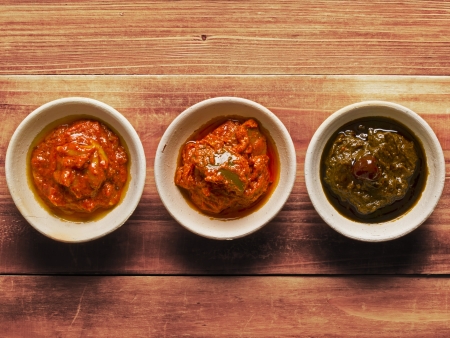
    three bowls of Indian pickles

    Aachar is the name for pickles of the Indian subcontinent. They are usually made by finely chopping fruit or vegetables and marinating them in brine or edible oil, and seasoning with spices. Some regions use the same technique for meat and fish.

    The most common pickles of this style are made from mango and lime, but others are made from a wide variety of ingredients, eg cauliflower, garlic, radish.

    These can be homemade or bought commercially.

    Recipe

    The Tarla Dalal website has lots of achaar recipes.

  • Wormwood

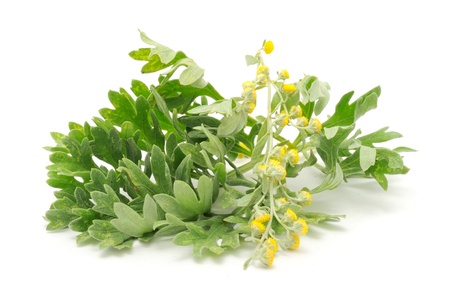
    Photo of the herb wormwood

    Wormwood is a bitter tasting, woody herb which has been used for centuries to flavour drinks. Its Latin name is Artemisa absinthium, which is where the drink absinthe gets its name.

    The name wormwood comes from the original German name for the plant, wermut, as the plant was believed to be a remedy for intestinal worms.

    Wormwood is a key ingredient in absinthe and vermouth.

  • Vermouth

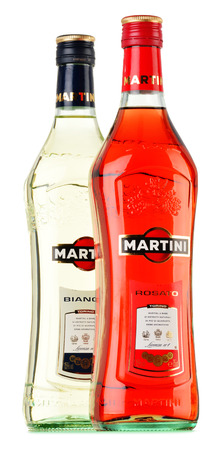
    Photo of Italian red and white vermouth

    Vermouth is an alcoholic drink made from a red or white wine base infused with any of a wide variety of aromatic herbs. It’s mostly used as a basis for cocktails. Its name comes from one herb in particular – wormwood.

    Vermouth is produced in the foothills of the Alps on both the French and Italian sides, where the necessary herbs are readily available.

    The commonest French vermouth is a dry white version, as used to make ‘dry Martini’ cocktails. Italian vermouth, by contrast, is mostly sweet. Both white and red (bianco and rosso) are made. The red vermouth is a key ingredient in the cocktail ‘Manhattan’.

    The most famous producers of vermouth include Martini, Rossi and Cinzano.

  • Eggnog

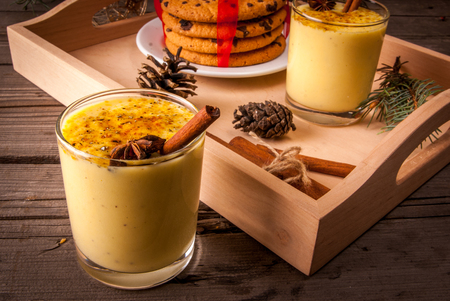
    photo of a Christmas scene with eggnog

    Eggnog is a rich, chilled, sweetened, dairy-based alcoholic beverage. Traditionally it’s made with whisked egg yolks, sugar, cream and brandy, rum or bourbon. The egg whites are whisked until foamy and added just before serving.

    It’s often drunk at celebrations, especially Christmas.  It’s commercially available premixed but it’s also easy to make at home.

    See also Advocaat and Zabov All’uovo which are traditional Dutch and Italian eggnogs respectively.

    Recipes

    Try Felicity Cloake’s perfect eggnog recipe

    BBC’s homemade eggnog

  • Dauphinoise

    Celeriac dauphinoise

    What is it?

    Gratin dauphinoise is a traditional French dish made with sliced potatoes, baked in cream, seasoned with nutmeg and garlic. Other vegetables can be cooked in the same way.

    The celeriac dauphinoise pictured above has been made as an individual portion but it’s more usual to make a large dish and split it into portions after baking.

    Recipes

    River Cottage potato dauphinoise

    Not Delia’s celeriac dauphinoise

  • Aiguillette

    Aiguillette is French and the word literally means ‘little needle’. In culinary terms it refers to a long, thin sliver of the choicest, most tender meat from either side of the breastbone of a duck or other fowl. It’s sometimes used to describe any thin strip of meat taken from a premium cut, such as from the rump or flank.

    The term is also used to denote certain sartorial ornamentation, especially on military uniforms.

  • Celeriac

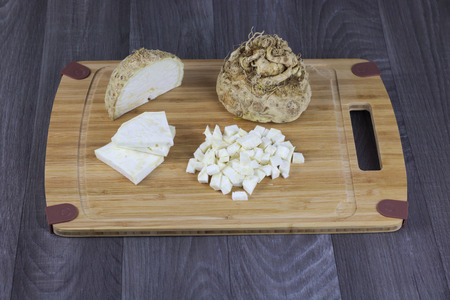
    photo of celeriac, whole, sliced, diced

    What is it?

    Celeriac is a relative of celery, cultivated for its edible roots.

    It’s often described as being ugly and sometimes as the unsung hero of the vegetable world.  It’s an oddly-shaped, knobbly, root vegetable which has a subtle, celery-like flavour, with nutty overtones.

    It’s available all year round but best in the colder months, ie September to April in the UK.

    What to do with it

    It’s can be used instead of potato in many dishes – it can be cooked in the same way – plus it can be eaten raw in salads. The French are particularly noted for their rémoulade, a salad of which finely grated celeriac is the main ingredient.

    It’s less well-known outside France but other typical dishes include using it as a mash, sometimes combined with mashed potatoes, in soups, or anywhere else where the use of root vegetables is appropriate.

    Recipe

    Try Not Delia’s celeriac and potato mash and celeriac dauphinoise.