Author: Scoffo

  • Ciabatta

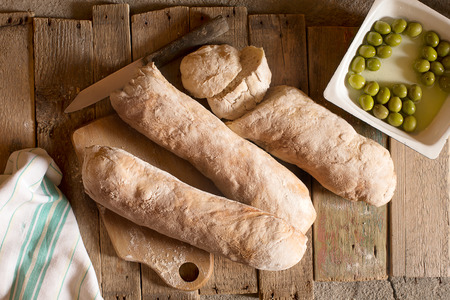
    crusty homemade Italian ciabatta bread

    Ciabatta is a type of Italian white bread which includes olive oil as one of its ingredients.  It was first created in Verona in response to the popularity of the French baguette. Literally, the name means ‘slipper’ as it was named by Francesco Favaron, the original baker, who thought its shape looked like his wife’s slippers.

    Toasted sandwiches made from small ciabatta loaves are called panini.

    Since its original invention in the 1960s, many new variations have been developed, including a wholemeal version known as ciabatta integrale.
  • Cranberry

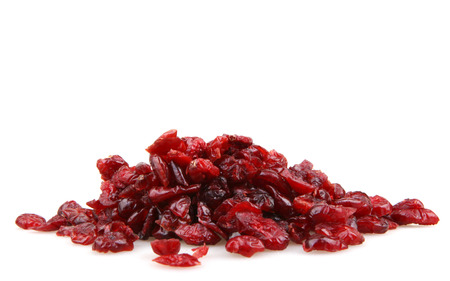
    dried cranberries

    Cranberries are little red berries with a bitter flavour. They grow wild on shrubs throughout Northern Europe and North America, but their cultivation is a major commercial operation in some American states and Canadian provinces.

    They have a high nutritional content and are believed to be valuable for their health-giving properties.

    Because the berries are so bitter, about 95% of the harvest is processed into juice, sauce or other condiments. They are also available dried and sweetened, as shown in the photo above.

    Cranberry sauce is the traditional accompaniment to the Christmas turkey in the UK and elsewhere, and at Thanksgiving dinners in the United States and Canada.

  • Ginger

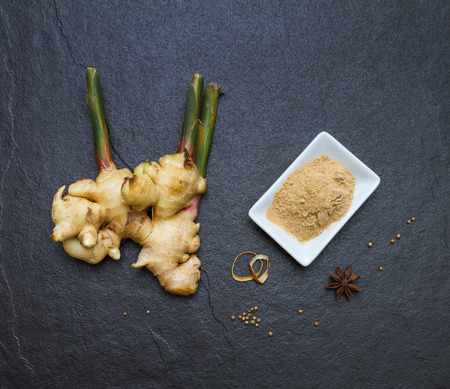
    whole ginger and powdered ginger

    Ginger is a flowering plant whose rhizome, or root, is highly prized as a spice. It originated in Southern Asia and was exported to Europe as early as the Roman times. These days it’s mainly grown in India, Jamaica, Africa, China and Australia.

    It’s widely used as a flavouring for many Asian and Caribbean dishes – most curries have a garlic and ginger base to which other spices are added. In Western culture, however, it’s more often used in baking, particularly in its powdered form (see above photo).

  • Gurnard

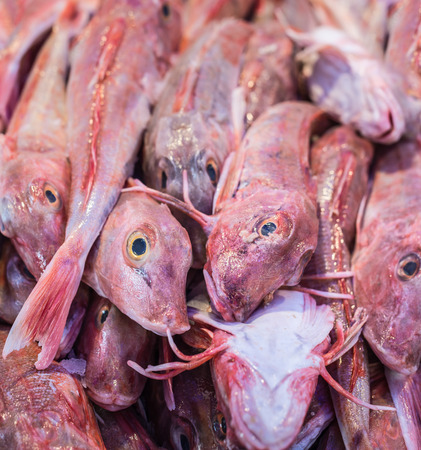
    box of red gurnard in a Dutch market

    The prehistoric-looking gurnard is a lean, firm, white-fleshed fish which lives on the seabed using its wing-like fins to find crabs, shrimps and other bottom-feeders. They are rather bony and lacking in flavour so the best use for them is to use the fish head to make a tasty stock.

  • Lobster

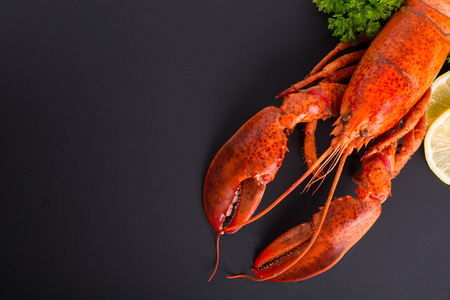
    cooked Canadian lobster

    Lobster is often considered to be the king of crustaceans and is thus an expensive delicacy. It has firm, white meat which is succulent and sweet.

    When raw it has a dark blue-green colour which turns a bright orange-pink when cooked. There are three main types of lobster: Canadian or American; European; Slipper or Squat lobster from warmer oceans. These are sometimes called ‘bugs’ in Australia and are generally not found in Europe.  Given that the flavour is thought to be better according to how cold the water is, the European lobster – caught around the coasts of Britain, Ireland, Norway and Brittany –  is considered to have the best flavour.

    The most humane way to kill a lobster is to put it in the freezer for a couple of hours. This will render it unconcious. You then insert a very sharp knife into the cross at the back of its head. This kills it instantly, and you can then proceed to cut it in half lengthways and steam or grill it.

    Favourite lobster recipes include Lobster Newberg and Lobster Thermidor. It’s also popular in soups, eg bisques. ‘Surf and turf’ is another option where seafood is served alongside red meat, usually lobster and steak. This is popular in North America and Australia but has not really caught on much in Britain.

    Homard is French for ‘lobster’.

  • Gorgonzola

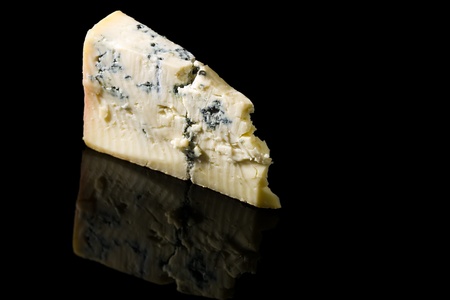
    a wedge of gorgonzola cheese

    Gorgonzola is a sharp-flavoured, blue-veined, creamy cheese which is named after the Italian village near Milan from where it originates.

    It’s made from unpasteurised cows milk and injected with greenish-blue mould which gives a lovely sharp contrast to the creamy cheese. It’s often found as a dessert cheese and is a cheeseboard favourite. It can also be crumbled onto pasta or risotto and used in salads and dressings.

  • Apricot

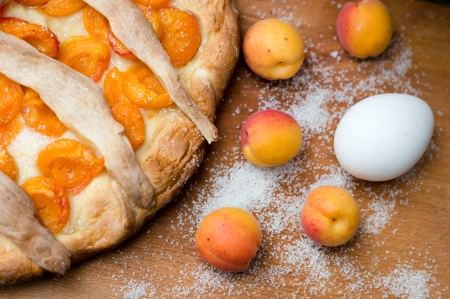
    photo of homemade apricot pie and whole apricots

    The apricot originated in China and spread slowly westward. It was introduced into England from Italy in 1542 by Jean Le Loup, Henry VIII’s gardener. It’s a fragrant fruit with a soft velvety skin and is a relative of the peach, nectarine, plum and cherry.

    British apricots are available from May to September, but more often they’re imported from countries with warm climates, eg hot European countries in the summer and Chile and South Africa in the northern hemisphere’s winter.

    Apricots are mostly used in tarts and crumbles or made into jams and compotes. Dried apricots are a popular, healthy snack, and are also used in savoury dishes in Turkey and Middle eastern countries.

  • Allspice

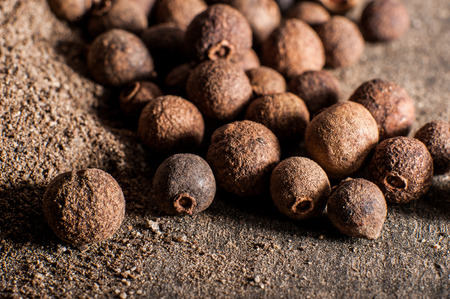
    allspice berries, whole and ground

    Allspice originates from the West Indies. It’s made from the dried, unripened berry of the tree Pimenta dioica, which is of the eucalyptus family.

    Historically it was called ‘Jamaican pepper’ and was frequently imported from Britain’s Caribbean colonies. Later it became more commonly known as allspice – the name given to it because it was thought to combine the flavours of cinnamon, cloves and nutmeg.

    The berries can be used whole or ground in both sweet and savoury dishes.

  • Bakewell tart

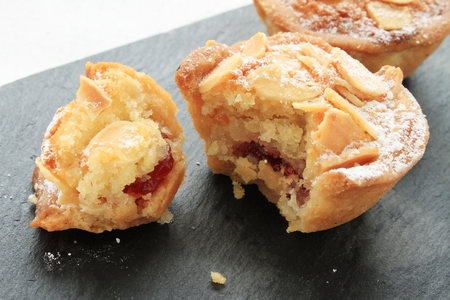
    photo of traditional bakewell tarts

    A Bakewell tart is a confection originating from Bakewell, a town in Derbyshire, England. Historically, it was served at any holiday occasion. Nowadays one could eat them on any day, usually with a cup of tea. Commercial versions are easily available.

    The tart consists of a shortcrust pastry shell, topped with a layer of jam, another of frangipane, and a topping of flaked almonds. The tart itself could be a large round, or a tray bake, which is then sliced into portions, or – as shown above – made into little, cup-cake-sized portions.

    The Bakewell pudding predates the Bakewell tart and the latter is thought to be a 20th century alteration.  The Bakewell pudding has a flaky pastry shell according to Mrs Beeton, although the pudding’s earliest record, by Elizabeth Acton in 1845, makes no mention of pastry.

    Recipe

    Felicity Cloake’s perfect Bakewell tart

  • Almond

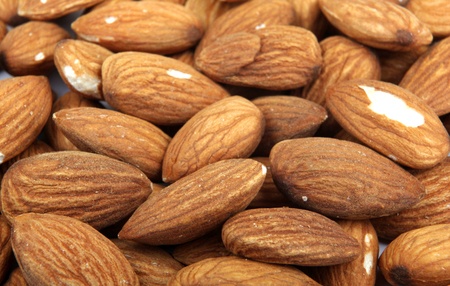
    photo of shelled almonds

    Almonds are the nuts of the almond tree, a close relative of the peach, apricot and plum.

    The are two types of almonds – bitter and sweet.

    The bitter almonds contain prussic acid but can be used sparingly to produce oils, extracts and flavourings, eg for the liqueur amaretto.

    The sweet almonds are the ones which are generally eaten.  They are often used in desserts, and are the main ingredient of marzipan and frangipane. They can also be used in savoury dishes, particularly fish. Trout with almonds was a particularly ubiquitous bistro dish in the 1960s.

    Almonds can be ground to make flour, which provides a gluten-free alternative to the more commonly used wheat flour.

    Chef’s Tip

    Blanched almonds are almonds with their skins removed. Make removing almond skins easier by scalding the almonds with boiling water, then leave them in the water for about five minutes. This should make them much easier to peel.  Alternatively, you can buy them already peeled.