croquembouche with pink and white frosting and roses
A croquembouche is a French dessert consisting of a pyramid of choux-buns bound with threads of caramel. It’s sometimes served instead of a wedding cake or as a treat at other parties. It’s become popular also to make a croquembouche to look like a decorative Christmas tree.
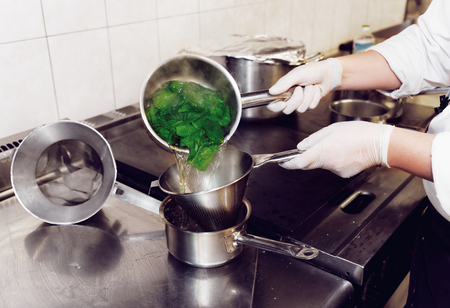
Blanching is to briefly and partially cook food, usually vegetables or fruit, in boiling liquid, usually water but oil is sometimes used.
The technique is useful for preparing vegetables for the freezer. In which case, once the food has been briefly cooked it’s usual to arrest the cooking process by plunging the fruit or vegetable into iced water. (This is called ‘shocking’ or ‘refreshing’.) The blanching technique is also used when preparing vegetables ahead of time. The blanched vegetables, being part-cooked, are quicker to fully cook later at the required time.
Usually when making roast potatoes, the spuds are parboiled or blanched before putting them in the roasting tin to roast in oil or lard.
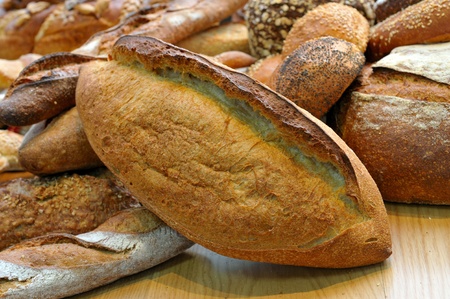
Slashing is a bakery term which refers to slashing the top of the dough with a very sharp knife or razor blade. This is crucial – a blunt knife simply won’t do the job properly.
As well as giving the bread an attractive appearance, historically – in the days of communal ovens – it was also the baker’s signature which enabled easy identification of which loaf belonged to whom.
Slashing the dough also has a practical function. It controls where the dough bursts during the rapid expansion which happens in the first stage of baking. This leads to a better texture of the loaf as well as making it look better.
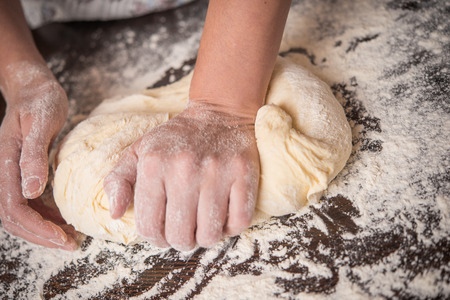
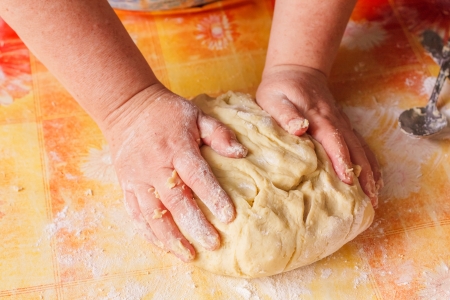
Kneading is the process of working dough, especially bread dough, to speed up the development of gluten to turn the dough into a firm and more workable mass. Kneading isn’t necessary – there are plenty of no-knead recipes. Given enough time and water, the proteins in wheat flour will do this for themselves. Kneading is simply a mechanical means of speeding up the biochemical process.
Kneading can be done by hand or by using the dough hook on a stand mixer. However, if using a domestic mixer, take care to read the manual for the machine otherwise you risk burning out the motor. Usually doughs have to be kneaded for at least ten minutes and many domestic machines recommend only running the motor for four minutes at a time.
Many people find hand kneading therapeutic. Others would prefer to let a machine do the grunt work. When the kneading process is complete, the dough should feel smooth and elastic. Some people describe is as ‘silky’.
When bread loaves are first put in the oven to bake, they swell rapidly. This is known as oven spring. If this has been planned for, eg by slashing the top with a lame or sharp knife, it can give the loaf an attractive design. However, a rupture, or random burst, could look unattractive so it’s generally advised to control the burst.
Autolyse is a term for bread baking technique of mixing the flour and water together and leaving it to rest before adding the other ingredients, such as yeast and salt. This simple technique is said to improve the structure of the bread as well as to make mixing and kneading easier.
Professor Raymond Calvel, a research chemist and a baking expert introduced the technique in his highly acclaimed book ‘Le Gout du Pain’, which was later published, in 2001, in English as ‘The Taste of Bread’.
Among other people, Calvel taught bread making to Julia Child.
More information
Try the BakeryBits website for more info about Professor Raymond Calvel and his autolysing technique.
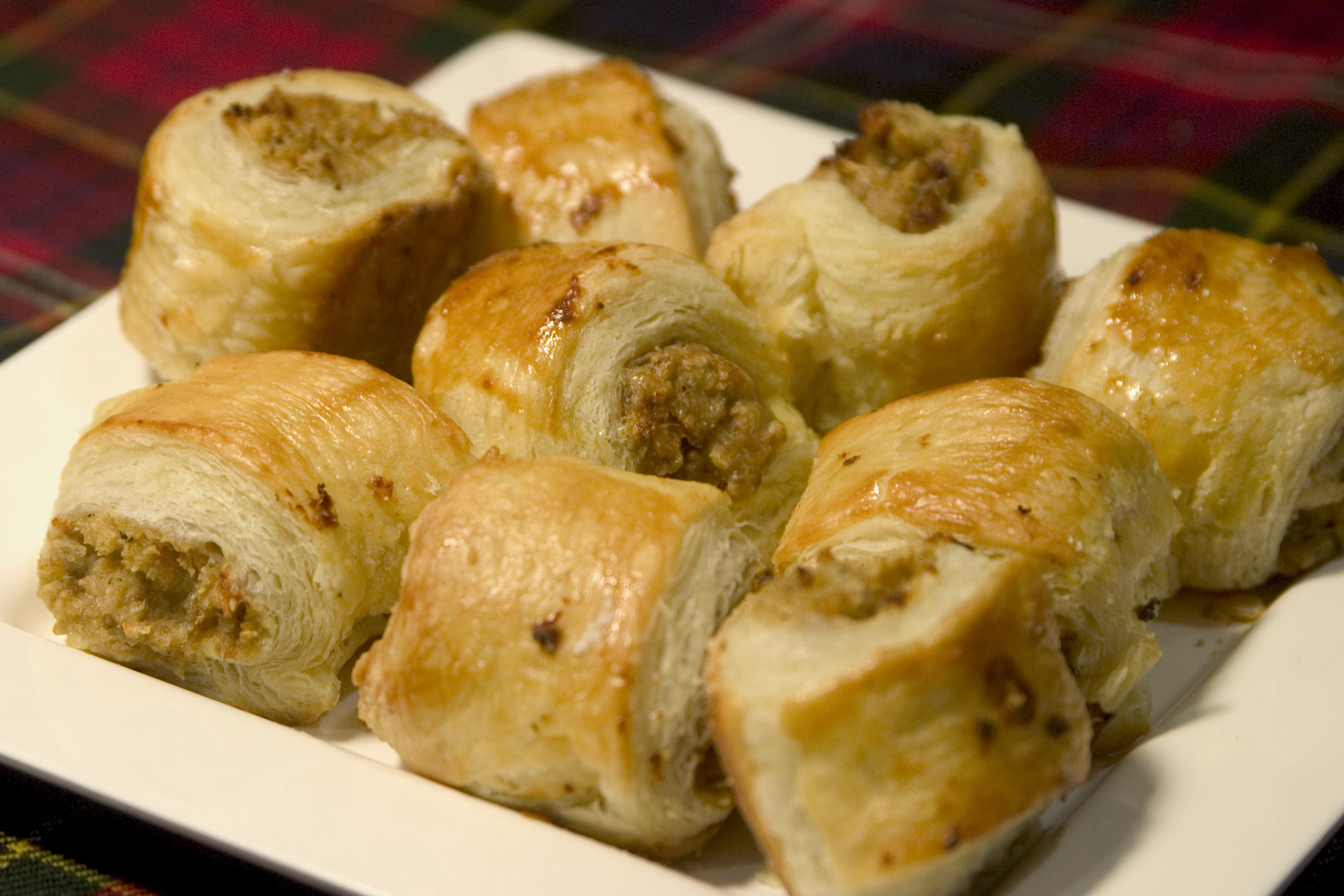
A sausage roll is a savoury pastry snack which is popular in Britain and in the Commonwealth nations. They’re commonly sold in retail outlets such as supermarkets and bakeries. The mini, or cocktail, versions are often served hot or cold as buffet or party food.
A sausage roll consists of a tube of sausage meat enclosed in puff pastry and baked.
True Balsamic vinegar is an artisan product from Modena, in Italy. It’s made from grape juice, which is simmered to make a concentrate, and then fermented. Finally it’s matured in barrels for a minimum of 12 years. The barrels used are made from different woods to impart different flavours. The result is a rich, dark and syrupy vinegar, which should be used sparingly – not least because it’s expensive. The real thing will be labelled ‘tradizionale’ and/or marked DOC.
It’s possible to buy cheaper balsamic vinegar. This is made industrially from vinegar and grape juice and is called ‘aceto balsamico di Modena’. This vinegar does not undergo the same ageing process as the artisan product and the flavour is inferior and weaker – but it’s fine for salad dressings and the like.
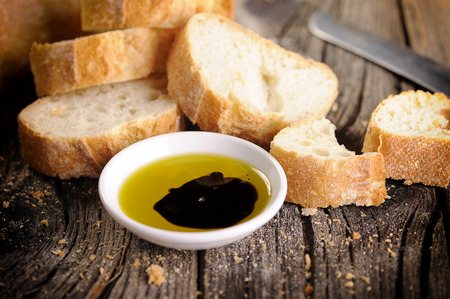
A typical Italian starter or side dish consists of bread served with balsamic vinegar and olive oil. Balsamic vinegar also marries well with fruit, particularly strawberries.
More information
See also Vinegar for more details about how vinegar is made.
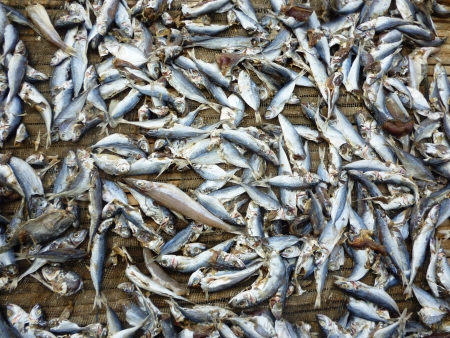
These small (usually between 8-10cm), silver fish are found in various parts of the world which have warmish salt water, eg the Mediterranean. For export, they are almost always filleted, salt-cured and packed in salt or oil. Then they can be purchased in jars or tins from shops and supermarkets around the world.
In some countries, other small fish are processed in the same way. These may be called “anchovies” locally even though they could be prepared from other types of fish.
Anchovies are a great cupboard standby and are popular as a pizza topping as well as in Caesar salad and many other dishes.
These tiny fish melt away to nothing when cooked and tend to leave a salty rather than a fishy taste. They are known for imparting umami to any dish to which they’re added. For those who have not yet acquired a taste for these little beauties, capers could provide an acceptable substitute.
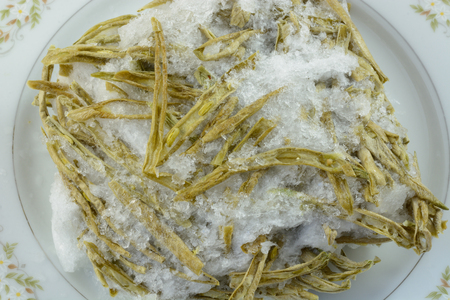
Freezer-burned French-style cut green beans – result of improper storage or packaging
Food which has been stored in a freezer without being properly wrapped or packaged can become dry and discoloured due to exposure to the air. This is known as freezer burn.
Freezer-burned food is still edible, assuming it’s not too ancient or hasn’t suffered some other deterioration. However, the flavour, texture, and nutrients will be lost or lacking. Therefore, it’s best to wrap or pack food carefully prior to freezing it so you can later benefit from the food at its best. When wrapping the food, take care to remove as much air as possible from the package and then seal the bag or wrapping.
Food kept in a freezer should be rotated so nothing gets lost in the back. Following the stock system of first-in-first-out (FIFO) is a good habit to get into.