Tag: vegetables

  • Dauphinoise

    Celeriac dauphinoise

    What is it?

    Gratin dauphinoise is a traditional French dish made with sliced potatoes, baked in cream, seasoned with nutmeg and garlic. Other vegetables can be cooked in the same way.

    The celeriac dauphinoise pictured above has been made as an individual portion but it’s more usual to make a large dish and split it into portions after baking.

    Recipes

    River Cottage potato dauphinoise

    Not Delia’s celeriac dauphinoise

  • Celeriac

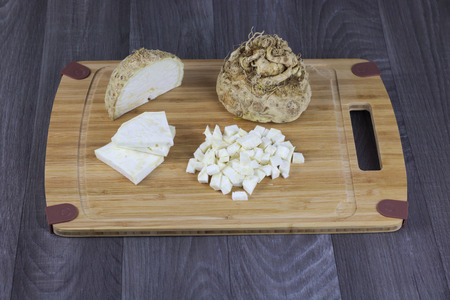
    photo of celeriac, whole, sliced, diced

    What is it?

    Celeriac is a relative of celery, cultivated for its edible roots.

    It’s often described as being ugly and sometimes as the unsung hero of the vegetable world.  It’s an oddly-shaped, knobbly, root vegetable which has a subtle, celery-like flavour, with nutty overtones.

    It’s available all year round but best in the colder months, ie September to April in the UK.

    What to do with it

    It’s can be used instead of potato in many dishes – it can be cooked in the same way – plus it can be eaten raw in salads. The French are particularly noted for their rémoulade, a salad of which finely grated celeriac is the main ingredient.

    It’s less well-known outside France but other typical dishes include using it as a mash, sometimes combined with mashed potatoes, in soups, or anywhere else where the use of root vegetables is appropriate.

    Recipe

    Try Not Delia’s celeriac and potato mash and celeriac dauphinoise.

  • Brussels sprouts

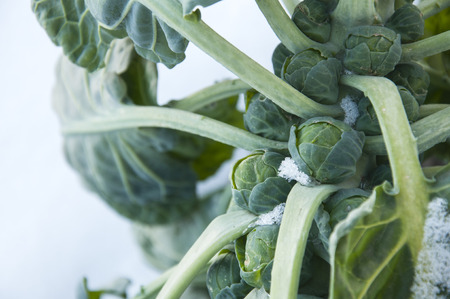
    photo of Brussels sprouts in a snowy field

    What are they?

    Brussels sprouts are like miniature cabbages which grow in multiple rows on a thick central stalk.

    The sprout is obviously a brassica, but it’s anybody’s guess when somebody mutated it from its original cabbage. I believe sprouts originated in Belgium, where they were sold in markets as early as the 13th century (they didn’t appear in England or France until the end of the 18th century). But most Belgians believe sprouts to be Italian in origin. We know that sprouts were mentioned in Belgian market regulations in 1213. The earliest French record I can find is an order for a wedding feast of the Burgundian court in the 15th century. We have no English recipes until the 19th century.

    Source: Gregg Wallace, Veg – the greengrocer’s cookbook

    What to do with them

    Many people associate Brussels sprouts with Christmas, it’s certainly a winter veg. They’re best between October and March in the UK. Many people, especially children, dislike sprouts because of their bitter taste. Perhaps this explains the British tradition of boiling them to death. It’s sometimes joked that October is the time to put the sprouts on to boil for Christmas. It’s fair to say that they’re an acquired taste. However, modern varieties have been bred to reduce the bitterness, and are often sweet and nutty, so if you have unhappy memories of eating sprouts as a child, it might be worth your while to give them another try.

    Another traditional British thing was to cut a cross in the base of the sprout. This will also lead to a mushy sprout. Instead cut the larger ones in half vertically.  Sprouts should ideally be served with a bit of bite still in them. Three or four minutes boiling should suffice. Serve with a knob of butter.

    The tops of the plants can also be eaten. They’re just like cabbage leaves after all –  cook them as you would spring greens.

    Recipe

    Christmas dinner made easy

  • Broccoli

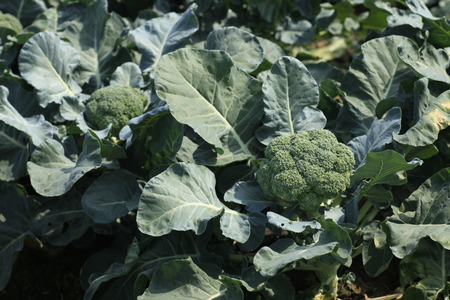
    photo of broccoli in the field

    What is it?

    Broccoli is a brassica, part of the cabbage family, as is it’s close relative the cauliflower.

    There are three types of broccoli:

    Calabrese

    This is the one with the thick stem and big clustery heads (pictured above). Calabrese is named after the Italian region it originates from, Calabria. It’s the most commonly used broccoli in Britain.

    Calabrese broccoli is available all year round in the UK but best between the end of July and the end of October.

    Sprouting

    This broccoli has thinner stems and a few sprouting heads on each stalk.

    Sprouting broccoli is best between January and May.

    Tenderstem

    This relative newcomer has a thin main stem with one head on the top.

    What to do with it

    Choose firm, bright green undamaged heads. Avoid any plants with signs of yellowing – they’re past their best. Cook it soon after purchase as it doesn’t last long, maybe three days, even in the fridge. If you must store it, keep it wrapped as it deteriorates more quickly when in contact with the air.

    Wash and cut the calabrese broccoli into florets first. Broccoli can be boiled, steamed or stir-fried. It doesn’t need long cooking. For example, depending on the size of floret, it can be boiled or steamed in about three minutes.

  • Aubergine (Eggplant)

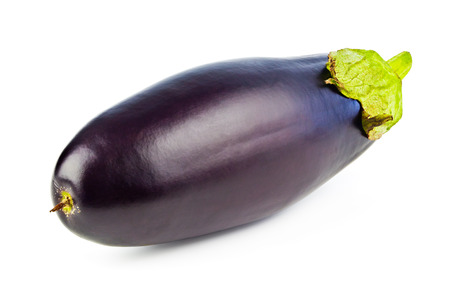
    30999842 - one purple eggplant isolated on white background

    What is it?

    It’s a fruit which is used as a vegetable. It comes in a wide variety of shapes, sizes and colours, ranging from the large, glossy, almost-black purple example above to the ‘pea aubergine’ which is popular in Thailand. The pea aubergine looks like a green pea, which in  Britain is sometimes used as a substitute for pea aubergines if they’re hard to source. The Thais also use a variety commonly known as ‘golf ball’ aubergines – for obvious reasons.

    Aubergines are widely used in Mediterranean cookery in dishes such as baba ganoush, ratatouille and moussaka.

    Traditionally, aubergines were salted prior to cooking to remove the bitterness. However, it’s not necessary today as modern varieties have had the bitterness bred out of them. That said even modern aubergines can become bitter with age, so if you’re forced to use an old aubergine, then you probably should salt it first. The exception to the ‘don’t salt it’ rule is if you’re going to fry the aubergines in oil. Aubergines cooked in such a way will be like a sponge and soak up a huge amount of oil – salting helps to prevent this.

    Recipes

    Yottam Ottelenghi’s Baba Ganoush

    Jamie Oliver’s Classic Ratatouille

    The Guardian – How to cook perfect moussaka

    Not Delia’s Thai Green Curry With Pork (or Chicken)

  • Watercress

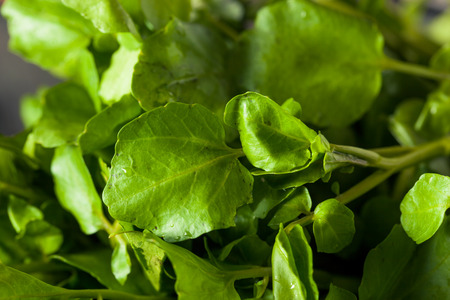
    photo of watercress

    Watercress is a close relative of the nasturtium and also related to mustard. It’s cultivated for its green, peppery-tasting leaves. It’s commonly used in salads or in soup. It makes a nice edible garnish too.

  • Asparagus

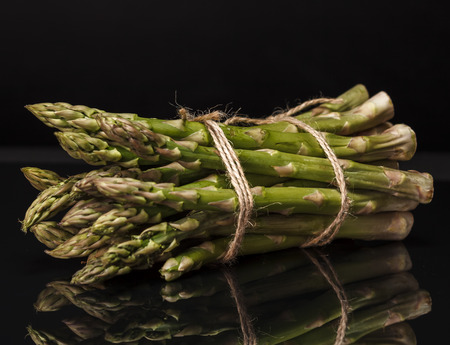
    photo of a bunch of asparagus spears

    Asparagus, a herbaceous perennial plant, is generally considered to be a luxury vegetable. Quite simply, it’s expensive to buy because it’s expensive to cultivate. A newly planted asparagus plant takes three years to produce spears that are good enough to sell. Then it will only produce spears for a further three years. Therefore, a typical asparagus field will only give a yield for half of the time. Additionally, asparagus requires a lot of land as each square foot will only produce about one spear. And then these spears have to be harvested manually as there’s yet no way to harvest them mechanically.

    Asparagus is graded by size, the ‘sprue’ being the slimmest and ‘jumbo’ the thickest.

    Most countries eat white asparagus and this is even more expensive to cultivate as the spear must be shielded from the light.

    White asparagus is a peculiar thing. I think so, but then I’m in a minority. I’m used to the green stuff, and I find white asparagus low in both texture and flavour. It is only in Britain, Italy and parts of the USA that eat their asparagus green. The rest of the world, and that includes most of Europe, eats it white. To keep it white, you have to build up the soil around it as it grows, keeping it underground and out of the light. You prepare the white as you do the green.

    Source: Gregg Wallace: Veg – the greengrocer’s cookbook

    Asparagus is a spring vegetable, and available in Britain from about May to July. Imports are available all year round but many people consider that locally grown veg tastes better than any which have flown half-way round the world.

    Asparagus which is limp is past its best; the spears should be firm with smooth skin, and the heads (what some call tips) tightly closed. Asparagus requires very little cooking – the simpler the better – just boil, steam or griddle. It can also be eaten raw but cooked briefly is better.

  • Water chestnut

    Whole unpeeled fresh water chestnuts on a plate

    The water chestnut (sometimes called Chinese chestnut) is not a nut at all. It’s an aquatic vegetable that grows, under water, in marshes.  It’s native to Asia, and is grown in many countries for its edible corms (swollen underground plant stems, like tubers).

    Most of us in the West will only ever have seen the tinned version of these, which is readily available in supermarkets. And if you’ve eaten water chestnuts in Britain, it’s likely to have been in a Chinese restaurant.

    The crunchy, white flesh of the small, rounded corms is good sliced up in Chinese food as it adds a nice texture to the dish. They’re most often steamed or stir-fried and served in dishes with rice or noodles.

    More information

    Not Delia: Fresh water chestnuts

  • Beetroot

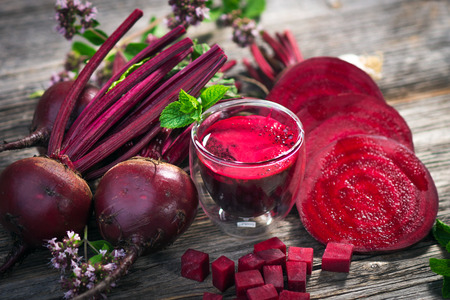
    photo of beetroot whole, sliced, diced and juiced


    What is it?

    Beetroot is the taproot portion of the beet plant, often known as simply the beet. The leaves are also edible, often called beet greens. British beetroot is usually available from July to January, but some may linger on until February or March.  Choose firm beetroot with fresh (unwilted) stalks.

    What to do with it

    The bulbous, dark purple roots are eaten boiled or roasted and sometimes raw in salads. Beetroot juice is also popular. It can also be used to make wine

    Beetroot has made a bit of a comeback recently. It had very bad press for a while. Anyone who experienced typical British cuisine in the 1960s and 70s will remember the pickled abomination which came in jars. Many people were put off beetroot for life because of this. But those who have the courage to try it again minus the industrial pickling process often find they like the rich, sweet, earthy taste.

    I am convinced that my childhood beetroot horror story is shared by countless other unfortunates, and that’s why beetroot isn’t used more often. The other reason could be that it stains everything – if you don’t scrub like a thing possessed, you can end up red-handed for weeks.

    Source: Gregg Wallace, Veg – the greengrocer’s cookbook

    There are other varieties and colours of beetroot but some are relatively rare, eg the golden beetroot.

    To boil beetroot cut off the root tips, leaves and stem but leave a little bit of the stem to prevent the beetroot from bleeding. Bring a large pan of salted water to the boil. Add the beetroot and simmer, uncovered, for about 30 minutes – depending on its size. It’s ready when a fork passes through easily. Drain and let cool a little, then peel and season. (Note, don’t peel the beetroot before boiling or the colour will bleed out.)


  • Pak choi and bok choi

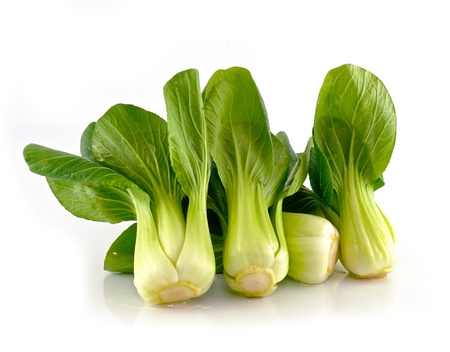
    photo of pak choi

    Pak choi and bok choi are types of Chinese cabbage and sometimes referred to simply as ‘Chinese cabbage’. People often seem to be confused by whether to say “pak” or “bok”.  Are they the same? In terms of texture and flavour, they are pretty much the same. But according to British celebrity greengrocer Gregg Wallace, there is a subtle difference in appearance.

    Pak choi has a white stem and a green leaf, bok choi is green all over. Simple, huh?

    In his book, Veg: the greengrocer’s cookbook, Wallace goes on to say that whilst most people restrict their use of bok choi to wok cooking and Oriental dishes, it’s also very good instead of cabbage in traditional Western meals. It has a lovely crunchy texture and none of the strong green cabbage flavour.

    Bok choi is a brassica, which makes it a member of the cabbage family. If you have never used it, don’t be under any illusion; it tastes as much like a green cabbage as your average penguin. Botanists also tell us that it’s closely related to the turnip. Makes you wonder doesn’t it? How can bok choi be related to a turnip.”

    Source: Gregg Wallace: Veg: the greengrocer’s cookbook

    You can boil, steam or stir fry bok choi – it only takes a few minutes to cook.

    Recipe

    To stir fry pak choi, rip layers from it one at a time, wash it well, chop or not.  Heat a couple of tablespoons of oil in a hot wok. Add pak choi and stir continuously for about three minutes, along with whatever else you fancy, eg vegetables, meat or fish, and noodles.