Tag: French cuisine

  • Croquembouche

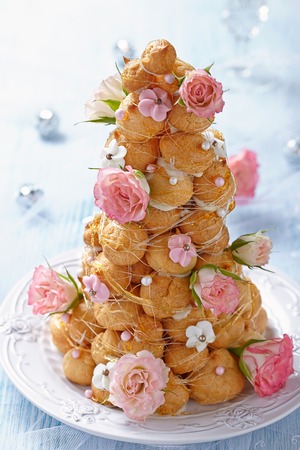
    croquembouche with pink and white frosting and roses
    croquembouche with pink and white frosting and roses

    A croquembouche is a French dessert consisting of a pyramid of choux-buns bound with threads of caramel. It’s sometimes served instead of a wedding cake or as a treat at other parties.  It’s become popular also to make a croquembouche to look like a decorative Christmas tree.


  • Autolyse

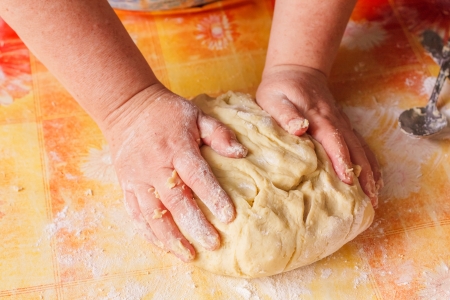
    Making bread dough
    Making bread dough

    Autolyse is a term for bread baking technique of mixing the flour and water together and leaving it to rest before adding the other ingredients, such as yeast and salt. This simple technique is said to improve the structure of the bread as well as to make mixing and kneading easier.

    Professor Raymond Calvel, a research chemist and a baking expert introduced the technique in his highly acclaimed book ‘Le Gout du Pain’, which was later published, in 2001, in English as ‘The Taste of Bread’.

    Among other people, Calvel taught bread making to Julia Child.

    More information

    Try the BakeryBits website for more info about Professor Raymond Calvel and his autolysing technique.

  • Gallimaufry

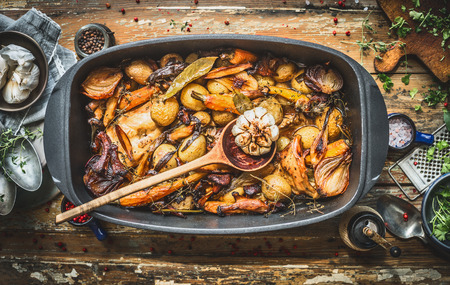
    Photo of a rabbit ragout to depict a gallimaufry
    Rabbit ragout


    The word gallimaufry originated from the French galimaufrée meaning a meat stew. The word was adopted in English to mean any kind of hotchpotch, potpourri, or jumble of things. In culinary terms these days it could be used to describe any ragout of mixed meat and/or vegetables.

  • Baguette

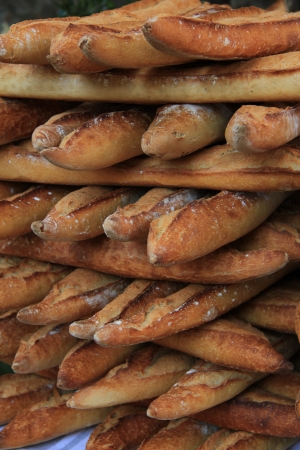
    traditional French baguettes at the market

    A baguette is a long, thin loaf of bread. It’s commonly known in English as a French stick. It’s made from a lean type of dough which is defined by French law. The dough traditionally contains wheat flour, water, yeast and salt. Some baguettes are made by using a ‘poolish’ – a starter dough to pre-ferment, like a sour dough loaf – but this is not mandatory.

    Due to its lack of fat content, the baguette is best eaten on the day of purchase as it doesn’t keep well.

  • Vermouth

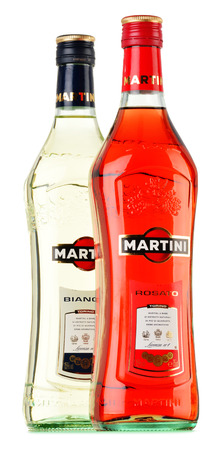
    Photo of Italian red and white vermouth

    Vermouth is an alcoholic drink made from a red or white wine base infused with any of a wide variety of aromatic herbs. It’s mostly used as a basis for cocktails. Its name comes from one herb in particular – wormwood.

    Vermouth is produced in the foothills of the Alps on both the French and Italian sides, where the necessary herbs are readily available.

    The commonest French vermouth is a dry white version, as used to make ‘dry Martini’ cocktails. Italian vermouth, by contrast, is mostly sweet. Both white and red (bianco and rosso) are made. The red vermouth is a key ingredient in the cocktail ‘Manhattan’.

    The most famous producers of vermouth include Martini, Rossi and Cinzano.

  • Dauphinoise

    Celeriac dauphinoise

    What is it?

    Gratin dauphinoise is a traditional French dish made with sliced potatoes, baked in cream, seasoned with nutmeg and garlic. Other vegetables can be cooked in the same way.

    The celeriac dauphinoise pictured above has been made as an individual portion but it’s more usual to make a large dish and split it into portions after baking.

    Recipes

    River Cottage potato dauphinoise

    Not Delia’s celeriac dauphinoise

  • Celeriac

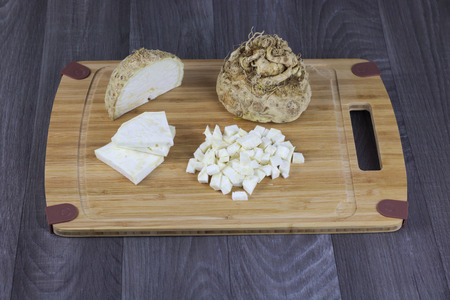
    photo of celeriac, whole, sliced, diced

    What is it?

    Celeriac is a relative of celery, cultivated for its edible roots.

    It’s often described as being ugly and sometimes as the unsung hero of the vegetable world.  It’s an oddly-shaped, knobbly, root vegetable which has a subtle, celery-like flavour, with nutty overtones.

    It’s available all year round but best in the colder months, ie September to April in the UK.

    What to do with it

    It’s can be used instead of potato in many dishes – it can be cooked in the same way – plus it can be eaten raw in salads. The French are particularly noted for their rémoulade, a salad of which finely grated celeriac is the main ingredient.

    It’s less well-known outside France but other typical dishes include using it as a mash, sometimes combined with mashed potatoes, in soups, or anywhere else where the use of root vegetables is appropriate.

    Recipe

    Try Not Delia’s celeriac and potato mash and celeriac dauphinoise.

  • Absinthe

    Absinthe

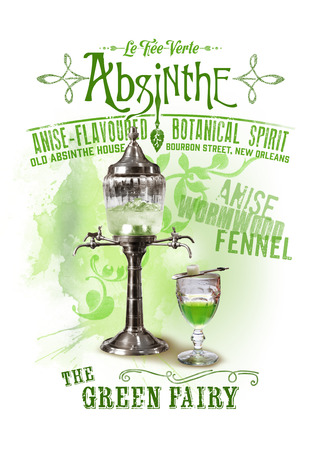
    NOLA collection poster of absinthe
    Absinthe is an unsweetened green liqueur with a taste of anise, flavoured with botanicals, primarily oil of wormwood. The oil is bitter, and contains the poison thujone – which has led to absinthe’s notoriety.

    The drink became very popular in France in the 19th century, but it is said that many suffered from hallucinations, seizures, or death from excessive drinking of absinthe. It was banned in many countries. Absinthe can be purchased legally in Britain.

    Absinthe was typically served by balancing sugar cubes on a special spoon and pouring ice cold water over the sugar cubes into the drink.

    Another anise-flavoured drink, pastis, has since taken absinthe’s share of the market. Indeed, a certain Monsieur Pernod purchased the original absinthe recipe in 1797 from its creator, Dr Ordinaire. That drink is also usually served diluted with water, at which time the clear liquid becomes cloudy and opaque.

    Absinthe’s reputation in the nineteenth century was akin to that of illegal drugs in the late twentieth century. The painter Manet depicted this in his famous painting The Absinthe Drinker (1859), in which a dejected devotee stares gloomily at the cloudy liquid in his glass.

    Absinthe has several nicknames, including ‘la verte’ (the green one) and ‘the green fairy’ (a reference to its alleged hallucinogenic properties).

    The poster above depicts these many aspects of absinthe.
  • Abondance

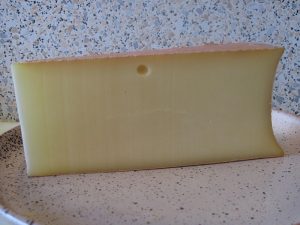
    photo of Abondance cheese

    Abondance (also called Tomme d’Abondance) is a semi-hard, fragrant raw milk cheese produced in Chablais, Haut-Savoie, in south-eastern France. It’s made from milk from Abondance cows, which is how it got its name. It must be aged for a minimum of three months on specially prepared spruce boards.

    Abondance cheese was granted Appellation d’origine contrôlée (AOC) status in 1990.

  • Abaisse

    This is a term used in French cookery. It means a sheet of rolled-out pastry. Abaisser means to roll out thinly.

    Sometimes the term abaisse is used for a biscuit (cookie) or a slice of sponge cake, which may be spread with cream or jam.

    The word isn’t very commonly used except in the case of French patisserie, so it’s probably not worth making a big effort to commit this one to memory just to expand your vocabulary.