Tag: bakery

  • Croquembouche

    croquembouche with pink and white frosting and roses
    croquembouche with pink and white frosting and roses

    A croquembouche is a French dessert consisting of a pyramid of choux-buns bound with threads of caramel. It’s sometimes served instead of a wedding cake or as a treat at other parties.  It’s become popular also to make a croquembouche to look like a decorative Christmas tree.


  • Slashing

    Various breads with slashes to control burst
    Various breads with slashes to control burst

    Slashing is a bakery term which refers to slashing the top of the dough with a very sharp knife or razor blade. This is crucial – a blunt knife simply won’t do the job properly.

    As well as giving the bread an attractive appearance, historically – in the days of communal ovens – it was also the baker’s signature which enabled easy identification of which loaf belonged to whom.

    Slashing the dough also has a practical function. It controls where the dough bursts during the rapid expansion which happens in the first stage of baking.  This leads to a better texture of the loaf as well as making it look better.

  • Knead

    Hand-kneading bread dough
    Hand-kneading bread dough

    Kneading is the process of working dough, especially bread dough, to speed up the development of gluten to turn the dough into a firm and more workable mass. Kneading isn’t necessary – there are plenty of no-knead recipes.  Given enough time and water, the proteins in wheat flour will do this for themselves. Kneading is simply a mechanical means of speeding up the biochemical process.

    Kneading can be done by hand or by using the dough hook on a stand mixer. However, if using a domestic mixer, take care to read the manual for the machine otherwise you risk burning out the motor.  Usually doughs have to be kneaded for at least ten minutes and many domestic machines recommend only running the motor for four minutes at a time.

    Many people find hand kneading therapeutic. Others would prefer to let a machine do the grunt work. When the kneading process is complete, the dough should feel smooth and elastic. Some people describe is as ‘silky’.

  • Burst

    Various breads with slashes to control burst
    Various breads with slashes to control burst

    When bread loaves are first put in the oven to bake, they swell rapidly. This is known as oven spring. If this has been planned for, eg by slashing the top with a lame or sharp knife, it can give the loaf an attractive design. However, a rupture, or random burst, could look unattractive so it’s generally advised to control the burst.

  • Autolyse

    Making bread dough
    Making bread dough

    Autolyse is a term for bread baking technique of mixing the flour and water together and leaving it to rest before adding the other ingredients, such as yeast and salt. This simple technique is said to improve the structure of the bread as well as to make mixing and kneading easier.

    Professor Raymond Calvel, a research chemist and a baking expert introduced the technique in his highly acclaimed book ‘Le Gout du Pain’, which was later published, in 2001, in English as ‘The Taste of Bread’.

    Among other people, Calvel taught bread making to Julia Child.

    More information

    Try the BakeryBits website for more info about Professor Raymond Calvel and his autolysing technique.

  • Maid of honour

    Photo of maids of honour tarts
    Maids of honour tarts

    Maids of honour are small almond-flavoured custard tarts, traditionally made with a lemon curd and cream cheese filling.  It’s said that Anne Boleyn invented them whilst she was lady in waiting to Catherine of Aragon and Henry VIII liked them so much he named them maids of honour after the Queen’s unmarried attendants.

    Recipe

    Asda Good Living Maids of Honour

  • Gluten

    Gluten

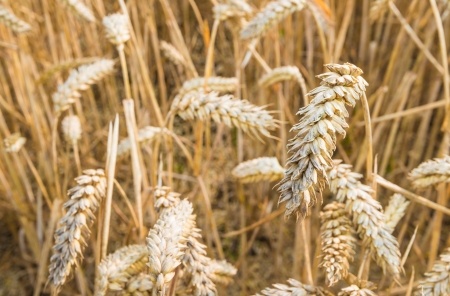
    ripe wheat ready for harvesting
    Gluten is a protein found predominantly in wheat, rye and barley. It may also be present in other cereals, either as a natural component or as a result of cross-contamination during harvesting. Therefore, anyone with a gluten-intolerance might be wise to check that any other cereal they purchase is in fact gluten-free.

    Gluten’s main culinary use is to give strength and elasticity to food products and it’s commonly found in wheat-flour-based products such as bread, pasta, pastry, and bakery items. It can also be found in many processed foods, eg ready meals, sausages, sauces and soups.

    Because we eat more processed foods these days, this has resulted in us eating significantly more gluten. Thus there is a greater chance that those with an intolerance to the protein will experience some of the painful digestive symptoms associated with this intolerance. But gluten intolerance should not be confused with coeliac disease, which is a life-long auto-immune condition.

    Nowadays products which are gluten-free are readily available in supermarkets and other stores.

  • Panettone

    photo of Christmas panettone on the left and stollen on the right

    Panettone is a type of sweet bread loaf which originated in Milan, Italy. It’s often found at Christmas, New Year and other celebrations in Southern Europe and Latin America.

    It’s pictured on the left above, with stollen on the right.

    Panettone takes a long time to make as the dough is cured, in a process similar to that for making sourdough bread. The proving takes several days. Traditionally, the cake contains contains candied citrus fruit such as oranges and lemons as well as dry (not soaked) raisins.

    It’s typically served in wedges with a sweet hot drink or a sweet wine or liqueur, eg amaretto.

    Recipe

    BBC Good Food’s Panettone

  • Baguette

    traditional French baguettes at the market

    A baguette is a long, thin loaf of bread. It’s commonly known in English as a French stick. It’s made from a lean type of dough which is defined by French law. The dough traditionally contains wheat flour, water, yeast and salt. Some baguettes are made by using a ‘poolish’ – a starter dough to pre-ferment, like a sour dough loaf – but this is not mandatory.

    Due to its lack of fat content, the baguette is best eaten on the day of purchase as it doesn’t keep well.

  • Bagel

    photo of bagels on a plate

    The bagel, also spelt beigel, is a bread product which originated in the Jewish communities of Poland.  Traditionally, it’s made of a yeasted wheat dough shaped into a ring, which is first boiled and then baked. These days some bagels are steamed before baking, thus eliminating the boiling stage.

    This process results in a dense, dough interior and sometimes a crusty exterior. Sometimes bagels are topped with seeds, eg poppy, sunflower or sesame, or salt. Bagels can also be made from different dough types, eg rye or wholemeal.

    Bagels are now very popular in North America, especially where there are large Jewish populations. They are also becoming increasingly popular and more readily available in Britain.

    Recipe

    BBC Good Food – bagels