Tag: alcohol

  • Lamb’s wool

    Lamb’s wool is a traditional English drink which was popular from the 16th to the 19th centuries. It consisted of beer, heated, sweetened and spiced. Then the soft, fluffy pulp of baked apples was mixed in – presumably leading to the drink being so-named.

    Samuel Pepys mentioned the drink in his diary on 9 November 1666:

    Being come home, we to Cards until two in the morning; and drinking lamb’s wool, to bed.

  • Amaretto

    amaretto liqueur with amaretti biscuits and shelled almonds

    Amaretto is a sweet, almond-flavoured liqueur which originates from Saronno, Italy. There are several commercial brands available notably Disaronno and Lazzaroni.

    It can be drunk on its own, with ice, in coffee or used as a cocktail base. It’s also used for various culinary purposes, to add flavour to both sweet and savoury dishes.

    At Christmas it’s often served with panettone, a type of Italian sweet bread.

    The word amaretto is a derivative of the Italian amaro, meaning ‘bitter’, because of the bitter almonds which are its main flavouring ingredient. Amaretti are similarly flavoured sweet little biscuits, like small macaroons. They are often purchased in individual tissue paper wrappings, although they can also be made at home.

  • Wormwood

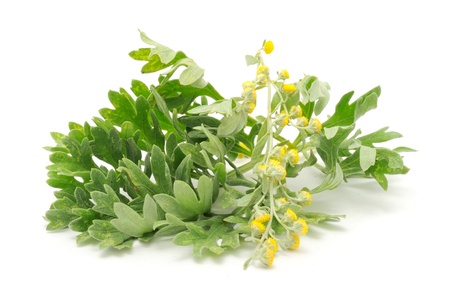
    Photo of the herb wormwood

    Wormwood is a bitter tasting, woody herb which has been used for centuries to flavour drinks. Its Latin name is Artemisa absinthium, which is where the drink absinthe gets its name.

    The name wormwood comes from the original German name for the plant, wermut, as the plant was believed to be a remedy for intestinal worms.

    Wormwood is a key ingredient in absinthe and vermouth.

  • Vermouth

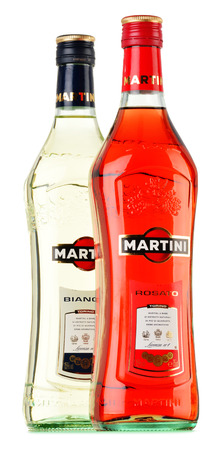
    Photo of Italian red and white vermouth

    Vermouth is an alcoholic drink made from a red or white wine base infused with any of a wide variety of aromatic herbs. It’s mostly used as a basis for cocktails. Its name comes from one herb in particular – wormwood.

    Vermouth is produced in the foothills of the Alps on both the French and Italian sides, where the necessary herbs are readily available.

    The commonest French vermouth is a dry white version, as used to make ‘dry Martini’ cocktails. Italian vermouth, by contrast, is mostly sweet. Both white and red (bianco and rosso) are made. The red vermouth is a key ingredient in the cocktail ‘Manhattan’.

    The most famous producers of vermouth include Martini, Rossi and Cinzano.

  • Eggnog

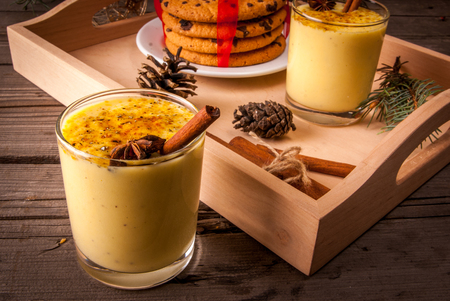
    photo of a Christmas scene with eggnog

    Eggnog is a rich, chilled, sweetened, dairy-based alcoholic beverage. Traditionally it’s made with whisked egg yolks, sugar, cream and brandy, rum or bourbon. The egg whites are whisked until foamy and added just before serving.

    It’s often drunk at celebrations, especially Christmas.  It’s commercially available premixed but it’s also easy to make at home.

    See also Advocaat and Zabov All’uovo which are traditional Dutch and Italian eggnogs respectively.

    Recipes

    Try Felicity Cloake’s perfect eggnog recipe

    BBC’s homemade eggnog

  • Advocaat

    photo of a Christmas scene with eggnog

    Advocaat is a Dutch eggnog, made from egg yolks, sugar and brandy. It’s a rich and creamy drink with a custard-like flavour.  The drink has a low alcohol content, typically between 14% and 20% ABV.

    In Dutch its name is short for advocaatenborrel, the ‘lawyer’s drink’, from advocaat, ‘advocate, lawyer’, and borrel, ‘drink’.

    Advocaat was the main ingredient in the cocktail “Snowball” which was popular in the 1960s. Nowadays eggnog is more typically served at celebrations, eg Christmas.

    See also the Italian version which is called Zabov Ull-uovo.

  • Absinthe

    Absinthe

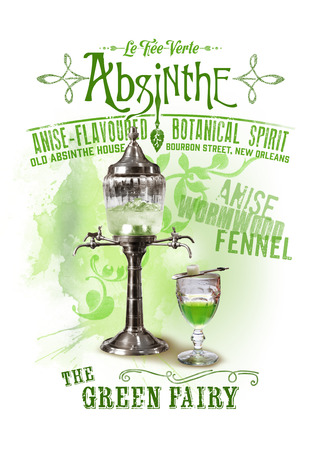
    NOLA collection poster of absinthe
    Absinthe is an unsweetened green liqueur with a taste of anise, flavoured with botanicals, primarily oil of wormwood. The oil is bitter, and contains the poison thujone – which has led to absinthe’s notoriety.

    The drink became very popular in France in the 19th century, but it is said that many suffered from hallucinations, seizures, or death from excessive drinking of absinthe. It was banned in many countries. Absinthe can be purchased legally in Britain.

    Absinthe was typically served by balancing sugar cubes on a special spoon and pouring ice cold water over the sugar cubes into the drink.

    Another anise-flavoured drink, pastis, has since taken absinthe’s share of the market. Indeed, a certain Monsieur Pernod purchased the original absinthe recipe in 1797 from its creator, Dr Ordinaire. That drink is also usually served diluted with water, at which time the clear liquid becomes cloudy and opaque.

    Absinthe’s reputation in the nineteenth century was akin to that of illegal drugs in the late twentieth century. The painter Manet depicted this in his famous painting The Absinthe Drinker (1859), in which a dejected devotee stares gloomily at the cloudy liquid in his glass.

    Absinthe has several nicknames, including ‘la verte’ (the green one) and ‘the green fairy’ (a reference to its alleged hallucinogenic properties).

    The poster above depicts these many aspects of absinthe.
  • Zabov all’uovo

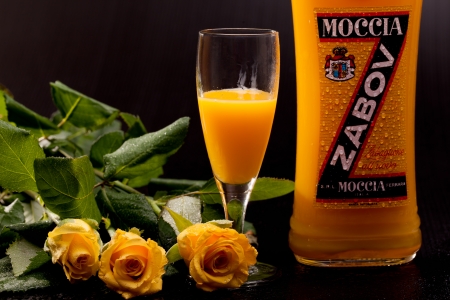
    zabov all'uovo

    Zabov all’uovo is a traditional Italian eggnog made with milk, fresh egg yolks, sugar, and a little alcohol (it’s only 15% ABV). It has a brandy flavour. It’s a sweet, energising liqueur, taken warm as a tonic, or any time for a celebration. It is also sometimes used as a complement for gourmet desserts.

    In 1946 a young merchant from Ferrara, driven by a passion for novelty, courageously decided to abandon the tranquillity of his family’s own business to undertake an entrepreneurial project and set up Distillerie A.R.P.A. di Mauro Moccia sas, a company “to produce and sell liqueurs, syrups and related products”.

    From March 2011 this ferrarese liquor was added to the official list of traditional products of the Emilia-Romagna region.

    Source: Ferrara: Terra e Acqua: Zabov – Zabaglione Egg Liquor

    It’s the Italian version of the better-known Dutch advocaat.