Category: Uncategorized

  • Anchovy

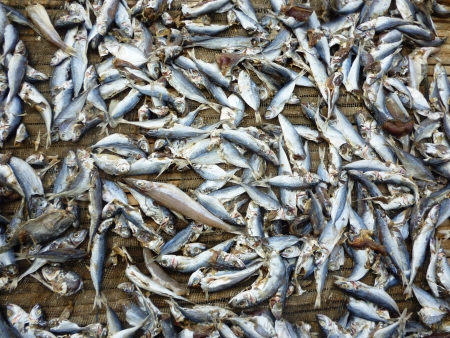
    Fish awaiting preparation into anchovies
    Fish awaiting preparation into anchovies


    These small (usually between 8-10cm), silver fish are found in various parts of the world which have warmish salt water, eg the Mediterranean. For export, they are almost always filleted, salt-cured and packed in salt or oil. Then they can be purchased in jars or tins from shops and supermarkets around the world.

    In some countries, other small fish are processed in the same way. These may be called “anchovies” locally even though they could be prepared from other types of fish.

    Anchovies are a great cupboard standby and are popular as a pizza topping as well as in Caesar salad and many other dishes.

    These tiny fish melt away to nothing when cooked and tend to leave a salty rather than a fishy taste. They are known for imparting umami to any dish to which they’re added. For those who have not yet acquired a taste for these little beauties, capers could provide an acceptable substitute.
     

  • Freezer burn

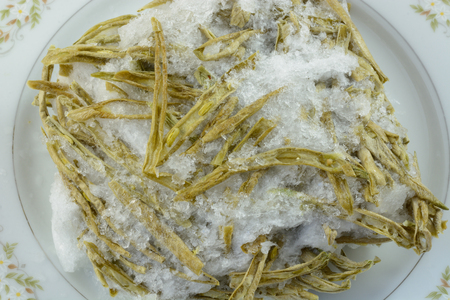
    freezer burned french style cut green beans from improper storage or packaging
    Freezer-burned French-style cut green beans – result of improper storage or packaging

    Food which has been stored in a freezer without being properly wrapped or packaged can become dry and discoloured due to exposure to the air. This is known as freezer burn.

    Freezer-burned food is still edible, assuming it’s not too ancient or hasn’t suffered some other deterioration. However, the flavour, texture, and nutrients will be lost or lacking. Therefore, it’s best to wrap or pack food carefully prior to freezing it so you can later benefit from the food at its best.  When wrapping the food, take care to remove as much air as possible from the package and then seal the bag or wrapping.

    Food kept in a freezer should be rotated so nothing gets lost in the back. Following the stock system of first-in-first-out (FIFO) is a good habit to get into.


  • Umami

    Fish awaiting preparation into anchovies
    Fish awaiting preparation into anchovies

    What is it?

    Umami (Japanese: from umai, ‘delicious’ and mi, ‘taste’) is one of the five basic tastes, along with sweet, salty, bitter and sour.

    In the early 20th century, Kikunae Ikeda, a Japanese chemistry professor, identified a particularly appealing taste common to certain foods.  But this taste sensation didn’t fall into any of the recognised taste categories; it had its own distinctly savoury character. This came to be known as ‘umami’ – the fifth taste.

    Adding umami flavours to a dish can really boost its flavour and the satisfaction the eater derives from it.

    List of some naturally umami-rich foods

    • anchovies and other items based on fermented fish
    • soy sauce
    • Parmesan cheese
    • black olives
    • garlic
    • dried mushrooms
    • tomato paste
    • extra virgin olive oil
    • asparagus
    • balsamic vinegar
    • wine vinegar
  • Squirrel

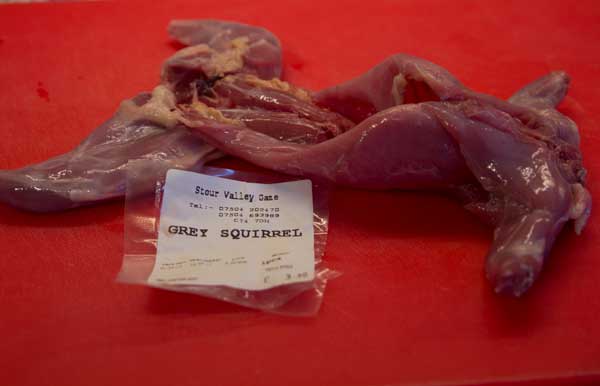
    Raw squirrel from the game merchant
    Raw squirrel from the game merchant

    Red squirrels, a type of rodent, are a protected species in the UK and so it’s illegal to kill or eat them. On the other hand, many organisations these days encourage the killing and eating of grey squirrels. The meat tastes a bit like rabbit but is more delicious.

    Recipe

    Try Not Delia’s grey squirrel with fennel.


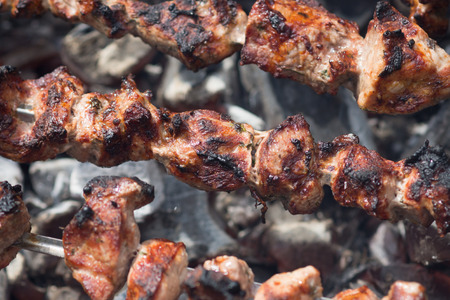
  • Shashlik

    photo of shashlik kebab skewers being barbequed
    Shashlik kebabs on a grill

    Shashlik (sometimes also called shashlyk or shish kebab) is a term given to skewered meat in some parts of the world, particularly in Eastern Europe and in Middle Eastern countries. Traditionally the meat used would be lamb or goat, especially in Islamic countries.  But these days it can be found with a variety of meat, eg pork, chicken, beef or fish, depending on local preferences and religious beliefs.

    Sometimes the skewers are threaded with meat only and sometimes the meat is alternated with pieces of fat – good for keeping the meat moist when grilling – or vegetable pieces, eg onion, bell pepper, tomato, mushrooms, etc.

    A favourite in Pakistan and Afghanistan is to serve several skewers of lamb or goat meat on a naan bread and accompany it with sliced red onions, sliced tomatoes, green chillies, a bunch of coriander, and lime wedges.

    Greece has a very similar type of kebab called souvlaki, and traditionally this is made with pork meat.


  • Souvlaki

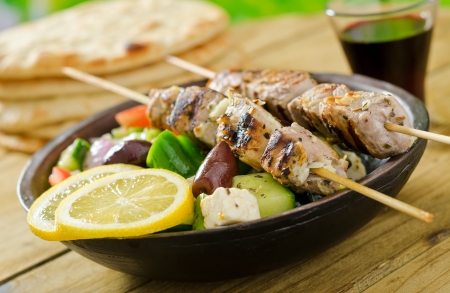
    Photo of grilled pork souvlaki skewers with Greek salad and lemon.
    Grilled pork souvlaki skewers with Greek salad and lemon

    Souvlaki is a popular type of Greek kebab in northern Greece. The same dish is called ‘kalamaki’ in southern Greece. It consists of small cubes of meat – and sometimes vegetables – skewered and grilled. It’s often served with flatbread, eg pitta, along with garnishes and sauces.

    Traditionally in Greece and Cyprus pork is used, although other meats – such as chicken, lamb, beef or even fish – can be used, especially on tourist menus.

    The word itself is derived from the Medieval Greek word for ‘skewer’.

    Recipe

    Rick Stein’s pork souvlaki with oregano


  • Lasagne

    Lasagne

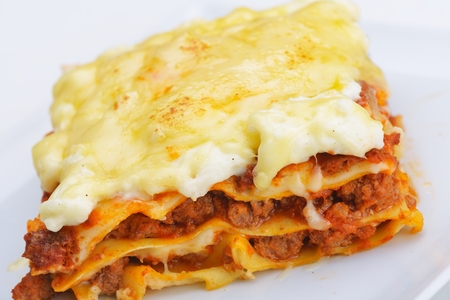
    photo of traditional lasagne
    Traditional lasagne made with bolognese sauce

    The word ‘lasagna’ is originally from the Greek word for ‘chamber pot’. The Romans then borrowed the word applying it as ‘cooking pot’. Perhaps you had to be there to get the joke. Later, the Italians adapted the word to mean a particular dish cooked in such a pot, and that is what we now know as lasagne.

    It consists of flat sheets of pasta layered with béchamel sauce, a meat and tomato sauce, and topped with Parmesan cheese.

    Lasagne verdi, or green lasagne, is lasagne sheets flavoured and coloured with spinach.

    Recipe

    Try Theo Randall’s lasagne recipe

  • Lamb’s wool

    Lamb’s wool is a traditional English drink which was popular from the 16th to the 19th centuries. It consisted of beer, heated, sweetened and spiced. Then the soft, fluffy pulp of baked apples was mixed in – presumably leading to the drink being so-named.

    Samuel Pepys mentioned the drink in his diary on 9 November 1666:

    Being come home, we to Cards until two in the morning; and drinking lamb’s wool, to bed.

  • Maid of honour

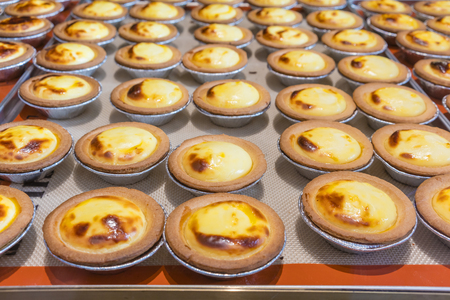
    Photo of maids of honour tarts
    Maids of honour tarts

    Maids of honour are small almond-flavoured custard tarts, traditionally made with a lemon curd and cream cheese filling.  It’s said that Anne Boleyn invented them whilst she was lady in waiting to Catherine of Aragon and Henry VIII liked them so much he named them maids of honour after the Queen’s unmarried attendants.

    Recipe

    Asda Good Living Maids of Honour

  • Gallimaufry

    Photo of a rabbit ragout to depict a gallimaufry
    Rabbit ragout


    The word gallimaufry originated from the French galimaufrée meaning a meat stew. The word was adopted in English to mean any kind of hotchpotch, potpourri, or jumble of things. In culinary terms these days it could be used to describe any ragout of mixed meat and/or vegetables.