Tag: party food

  • Croquembouche

    croquembouche with pink and white frosting and roses
    croquembouche with pink and white frosting and roses

    A croquembouche is a French dessert consisting of a pyramid of choux-buns bound with threads of caramel. It’s sometimes served instead of a wedding cake or as a treat at other parties.  It’s become popular also to make a croquembouche to look like a decorative Christmas tree.
     

  • Sausage rolls

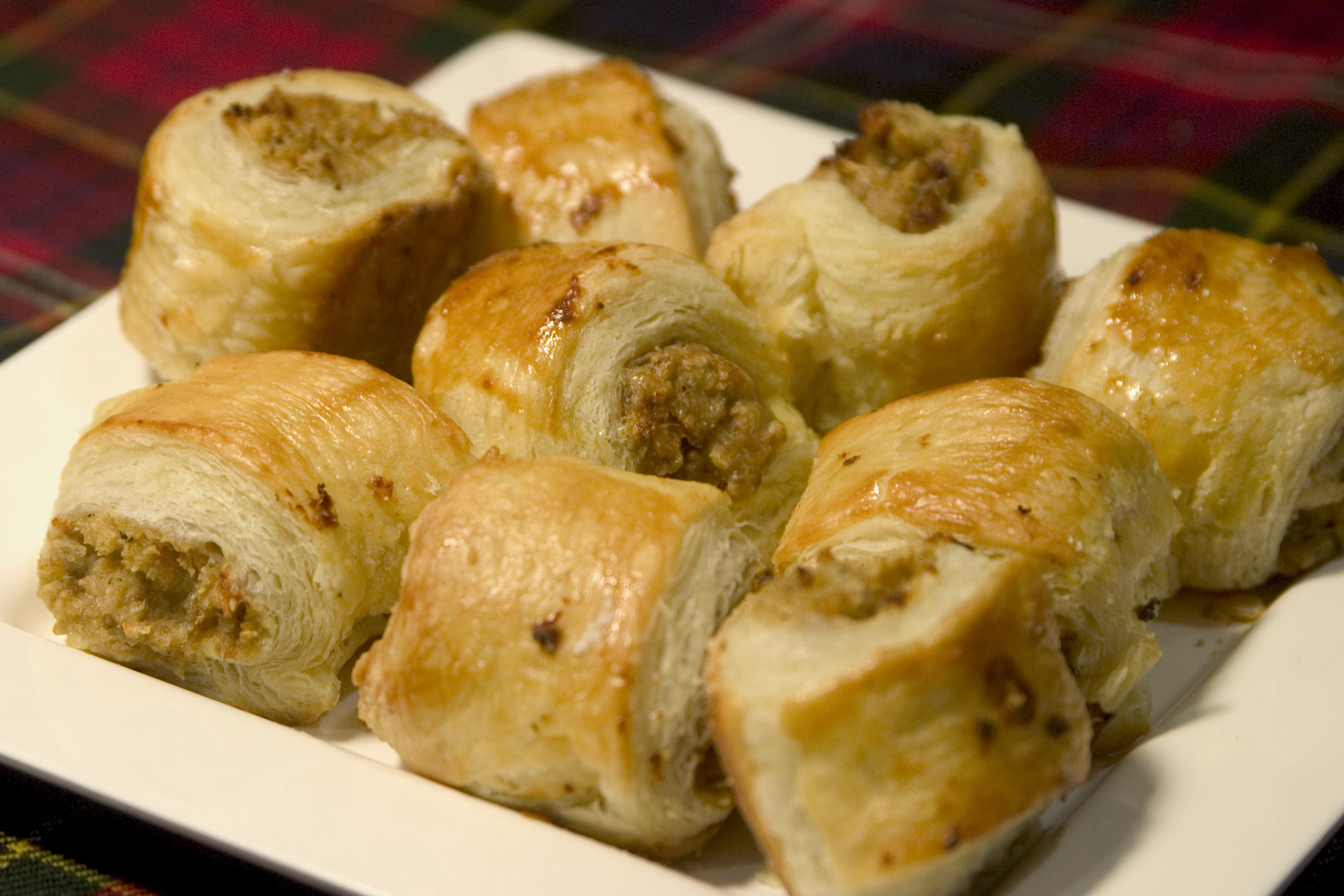
    Cocktail sausage rolls for Burns Night
    Cocktail sausage rolls for Burns Night

    A sausage roll is a savoury pastry snack which is popular in Britain and in the Commonwealth nations.  They’re commonly sold in retail outlets such as supermarkets and bakeries.  The mini, or cocktail, versions are often served hot or cold as buffet or party food.

    A sausage roll consists of a tube of sausage meat enclosed in puff pastry and baked.

    More information

    Not Delia makes cocktail sausage rolls

    Recipe

    John Torode’s sausage rolls


  • Panettone

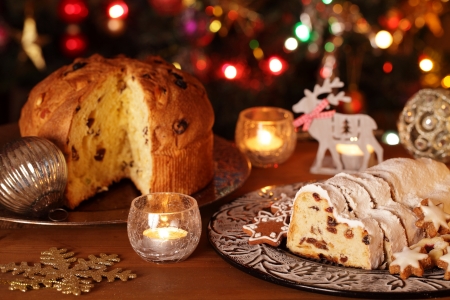
    photo of Christmas panettone on the left and stollen on the right

    Panettone is a type of sweet bread loaf which originated in Milan, Italy. It’s often found at Christmas, New Year and other celebrations in Southern Europe and Latin America.

    It’s pictured on the left above, with stollen on the right.

    Panettone takes a long time to make as the dough is cured, in a process similar to that for making sourdough bread. The proving takes several days. Traditionally, the cake contains contains candied citrus fruit such as oranges and lemons as well as dry (not soaked) raisins.

    It’s typically served in wedges with a sweet hot drink or a sweet wine or liqueur, eg amaretto.

    Recipe

    BBC Good Food’s Panettone

  • Cranberry

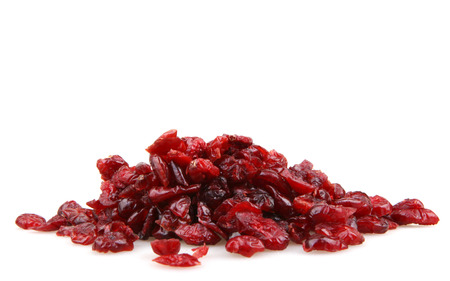
    dried cranberries

    Cranberries are little red berries with a bitter flavour. They grow wild on shrubs throughout Northern Europe and North America, but their cultivation is a major commercial operation in some American states and Canadian provinces.

    They have a high nutritional content and are believed to be valuable for their health-giving properties.

    Because the berries are so bitter, about 95% of the harvest is processed into juice, sauce or other condiments. They are also available dried and sweetened, as shown in the photo above.

    Cranberry sauce is the traditional accompaniment to the Christmas turkey in the UK and elsewhere, and at Thanksgiving dinners in the United States and Canada.

  • Eggnog

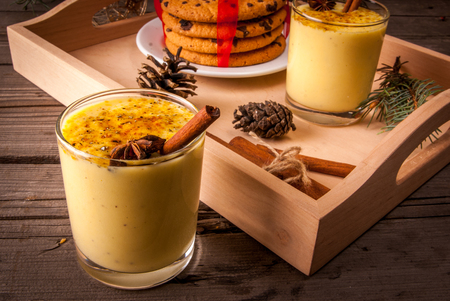
    photo of a Christmas scene with eggnog

    Eggnog is a rich, chilled, sweetened, dairy-based alcoholic beverage. Traditionally it’s made with whisked egg yolks, sugar, cream and brandy, rum or bourbon. The egg whites are whisked until foamy and added just before serving.

    It’s often drunk at celebrations, especially Christmas.  It’s commercially available premixed but it’s also easy to make at home.

    See also Advocaat and Zabov All’uovo which are traditional Dutch and Italian eggnogs respectively.

    Recipes

    Try Felicity Cloake’s perfect eggnog recipe

    BBC’s homemade eggnog

  • Advocaat

    photo of a Christmas scene with eggnog

    Advocaat is a Dutch eggnog, made from egg yolks, sugar and brandy. It’s a rich and creamy drink with a custard-like flavour.  The drink has a low alcohol content, typically between 14% and 20% ABV.

    In Dutch its name is short for advocaatenborrel, the ‘lawyer’s drink’, from advocaat, ‘advocate, lawyer’, and borrel, ‘drink’.

    Advocaat was the main ingredient in the cocktail “Snowball” which was popular in the 1960s. Nowadays eggnog is more typically served at celebrations, eg Christmas.

    See also the Italian version which is called Zabov Ull-uovo.

  • Gravadlax

    Marinated salmon served on a mousse and salad bed


    Gravadlax, also known as gravlax, is a Scandinavian dish consisting of fresh, raw salmon fillet marinated with salt, sugar and dill. Once cured, it’s sliced thinly. It originated as a means to preserve fish in the days before refrigeration. The fish was prepared with salt and dill and then buried in the ground. (‘Grav’ is Swedish for ‘grave’ or ‘pit’. ‘Lax’ is Swedish for ‘salmon’.)

    These days it can easily be made at home in the fridge. Using beetroot in the cure has become fashionable and gives the salmon an interesting colour. The Not Delia website has a delicious take on this using a fresh orange, honey and soy sauce.

    Not Delia: Marinated salmon