Tag: fruit

  • Banana

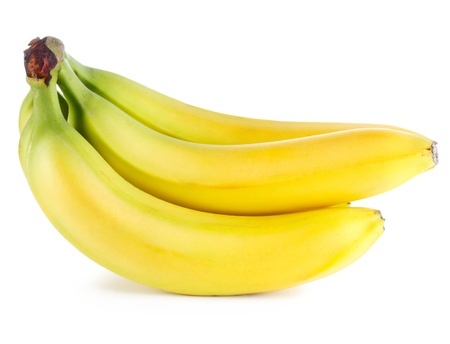
    photo of a bunch of ripe bananas

    Nowadays this tropical fruit is an everyday household ingredient but historically it was perceived as an exotic rarity. Even just after World War II rationing, it was considered to be a rare treat.

    Bananas probably originated in Southeast Asia, and from there to the Middle East and then on to Africa.  From there, Spanish and Portuguese colonists took them to the Americas.

    Bananas are highly nutritious and a convenient, portable snack.

  • Apricot

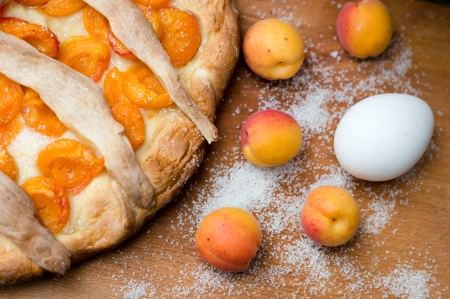
    photo of homemade apricot pie and whole apricots

    The apricot originated in China and spread slowly westward. It was introduced into England from Italy in 1542 by Jean Le Loup, Henry VIII’s gardener. It’s a fragrant fruit with a soft velvety skin and is a relative of the peach, nectarine, plum and cherry.

    British apricots are available from May to September, but more often they’re imported from countries with warm climates, eg hot European countries in the summer and Chile and South Africa in the northern hemisphere’s winter.

    Apricots are mostly used in tarts and crumbles or made into jams and compotes. Dried apricots are a popular, healthy snack, and are also used in savoury dishes in Turkey and Middle eastern countries.

  • Aubergine (Eggplant)

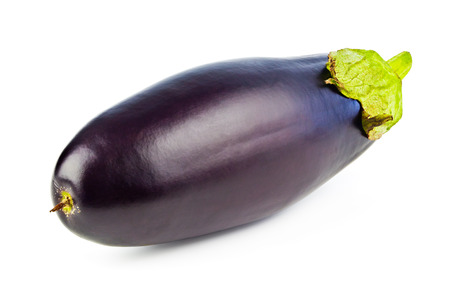
    30999842 - one purple eggplant isolated on white background

    What is it?

    It’s a fruit which is used as a vegetable. It comes in a wide variety of shapes, sizes and colours, ranging from the large, glossy, almost-black purple example above to the ‘pea aubergine’ which is popular in Thailand. The pea aubergine looks like a green pea, which in  Britain is sometimes used as a substitute for pea aubergines if they’re hard to source. The Thais also use a variety commonly known as ‘golf ball’ aubergines – for obvious reasons.

    Aubergines are widely used in Mediterranean cookery in dishes such as baba ganoush, ratatouille and moussaka.

    Traditionally, aubergines were salted prior to cooking to remove the bitterness. However, it’s not necessary today as modern varieties have had the bitterness bred out of them. That said even modern aubergines can become bitter with age, so if you’re forced to use an old aubergine, then you probably should salt it first. The exception to the ‘don’t salt it’ rule is if you’re going to fry the aubergines in oil. Aubergines cooked in such a way will be like a sponge and soak up a huge amount of oil – salting helps to prevent this.

    Recipes

    Yottam Ottelenghi’s Baba Ganoush

    Jamie Oliver’s Classic Ratatouille

    The Guardian – How to cook perfect moussaka

    Not Delia’s Thai Green Curry With Pork (or Chicken)

  • Ackee

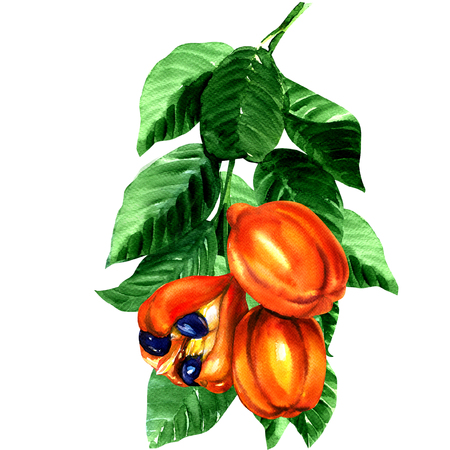
    water colour painting of tropical blighia sapida fruit, ackee tree,

    Ackee, sometimes called ‘akee’, is the red, pear-shaped fruit of a tropical African tree. It’s related to the lychee and the longan. The fruit is very popular in Caribbean cuisine – it’s the national fruit of Jamaica – and is thought to have first arrived from Africa via a slave ship. It was later imported to Kew Botanical Gardens from Jamaica by Captain William Bligh of the Bounty in 1793.

    When it ripens, it turns from green to a bright red to yellow-orange, and splits open to reveal three large, shiny black seeds, each partly surrounded by soft, creamy or spongy, white to yellow edible flesh—the aril. The fruit is toxic before it ripens and should not be eaten.

    Canned ackee is available from some supermarkets and Afro-Caribbean grocers. Although technically a fruit, it’s usually served as a vegetable, commonly as an accompaniment to salt fish, but see below for a recipe by Levi Roots.

    Recipe

    Steak, peppers and tomatoes with ackee and mushrooms

  • Pomegranate

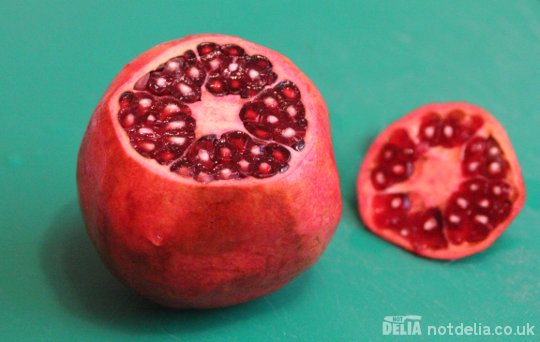
    A topped and tailed pomegranate

    Pomegranates originate from Persia, but are now mainly grown in Spain, the Middle East, and America.  They’re round, about the size of an apple, with a hard, shiny, red skin, which is inedible. Inside the fruit you’ll find countless little edible seeds, each of which is contained in a jewel-like sac of sweet juice. The sacs are packaged in a bitter, inedible pith so to prepare the pomegranate you’ll need to get rid of the pith.

    Pomegranate is mostly used in salads, especially in the Middle East, or as a garnish to decorate meat dishes. Alternatively, you could eat it straight from the shell using a cocktail stick to extract the juice sacs. It’s considered by some to be a ‘superfood’ as it’s highly nutritious.

    More information

    Not Delia: How to prepare a pomegranate

  • Avocado

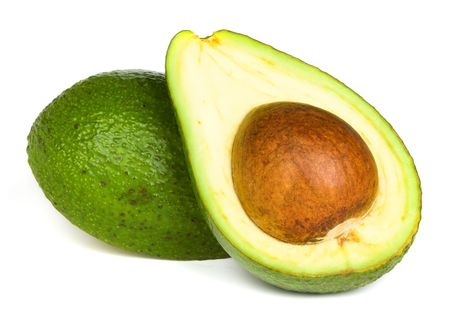
    ripe avocado

    The mild-flavoured avocado pear – these days often shortened to simply ‘avocado’, and sometimes also known as the alligator pear or the butter pear – is technically the fruit of the avocado tree (and unrelated to true pears) but is commonly used as a vegetable. (Sainsburys, who in 1962 were the first supermarket chain to distribute them, soon dropped the ‘pear’ off the name after several customers tried to eat them with custard.)

    There are four main varieties. Hass, which has a dark, knobbly skin, is often considered to be the best. Other varieties include: the pear-shaped, smooth-skinned Ettinger; Fuerte (of which a baby-sized variety is also available); and the more spherical Nabal.

    It’s usually eaten raw although it can be cooked briefly without becoming too bitter. The fruit is native to central America. Mexico is the world’s largest producer of avocados but they are also grown in other places where the climate is suitable, eg in Mediterranean countries. Avocado forms the basis for the popular Mexican dip guacamole.

    Avocados are highly nutritious, containing Vitamin E, potassium, iron and niacin. The avocado is unique among fruit in that it also contains oil – most of it monounsaturated.

  • Watermelon

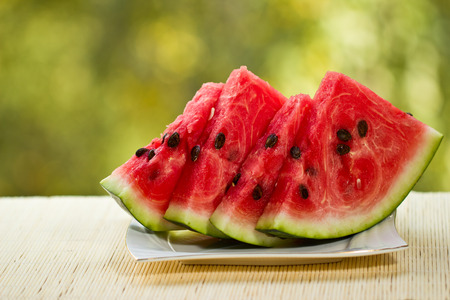
    slices of red watermelon

    Watermelons are large, sometimes stripy, dark green spherical fruits, although there are some other rarer varieties of different coloured rind. The relatively tasteless but refreshing and thirst-quenching flesh is usually crimson, red or pink, but again other varieties are known. They’re members of the gourd family, along with cucumbers, pumpkins and courgettes.

    Jane Grigson is said to have referred to them as “green cannonballs” but generally the fruits are much larger than the average cannonball. They’re more similar in size to a football and can grow up to six kilograms in weight.

    They are thought to have originated in southern Africa and are said to have crossed the Atlantic to the USA on the slave ships. These days they’re grown anywhere the climate is suitable.

    The rind, which has an unpleasant flavour, is sometimes pickled and eaten, especially in the southern US. Watermelons are usually sliced and served raw, either on their own or as part of a fruit or a savoury salad, eg with mint leaves and feta cheese.