Tag: fish

  • Albacore

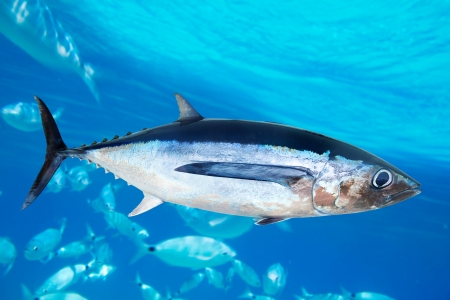
    An albacore (Thunnus alalunga)
    The albacore is a species of tuna found in all three of the world’s major oceans as well as the Mediterranean Sea.

    It’s a popular source of tuna for canning – the history of tuna canning goes back to 1903 when 700 cases of albacore were experimentally canned.

    In the US it’s the only species that can legally be described as “white meat tuna”. The canning industry use this phrase to distinguish albacore meat from other tuna species.

    It’s also known as longfin tuna. This is because of the long pectoral fin running down its side, for up to 30% of the total length of the fish.

    Like all fish it accumulates methylmercury over time, but as it’s an apex predator (at the top of the food chain) it does so to a greater extent than most fish species. Although the human body does naturally break methylmercury down over time, it takes over a year to do so.

    Albacore caught individually by pole is reckoned to be the most sustainable form of tuna, so look out for it when shopping.
  • Anchovy

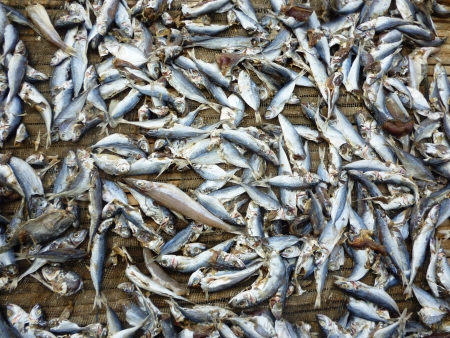
    Fish awaiting preparation into anchovies
    Fish awaiting preparation into anchovies


    These small (usually between 8-10cm), silver fish are found in various parts of the world which have warmish salt water, eg the Mediterranean. For export, they are almost always filleted, salt-cured and packed in salt or oil. Then they can be purchased in jars or tins from shops and supermarkets around the world.

    In some countries, other small fish are processed in the same way. These may be called “anchovies” locally even though they could be prepared from other types of fish.

    Anchovies are a great cupboard standby and are popular as a pizza topping as well as in Caesar salad and many other dishes.

    These tiny fish melt away to nothing when cooked and tend to leave a salty rather than a fishy taste. They are known for imparting umami to any dish to which they’re added. For those who have not yet acquired a taste for these little beauties, capers could provide an acceptable substitute.


  • Gurnard

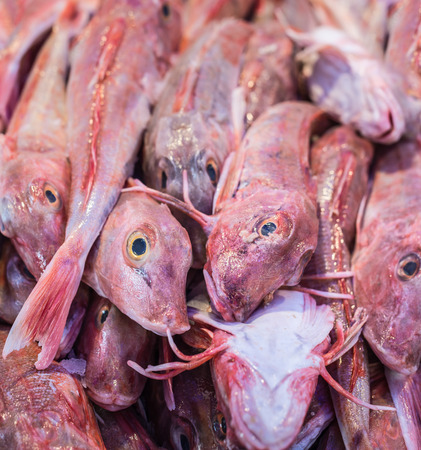
    box of red gurnard in a Dutch market

    The prehistoric-looking gurnard is a lean, firm, white-fleshed fish which lives on the seabed using its wing-like fins to find crabs, shrimps and other bottom-feeders. They are rather bony and lacking in flavour so the best use for them is to use the fish head to make a tasty stock.

  • Gravadlax

    Marinated salmon served on a mousse and salad bed


    Gravadlax, also known as gravlax, is a Scandinavian dish consisting of fresh, raw salmon fillet marinated with salt, sugar and dill. Once cured, it’s sliced thinly. It originated as a means to preserve fish in the days before refrigeration. The fish was prepared with salt and dill and then buried in the ground. (‘Grav’ is Swedish for ‘grave’ or ‘pit’. ‘Lax’ is Swedish for ‘salmon’.)

    These days it can easily be made at home in the fridge. Using beetroot in the cure has become fashionable and gives the salmon an interesting colour. The Not Delia website has a delicious take on this using a fresh orange, honey and soy sauce.

    Not Delia: Marinated salmon

  • Chowder

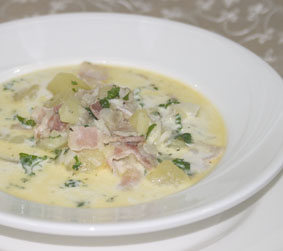
    chowder

    What is it?

    Chowder is stew-like soup with milk or cream, thickened with crackers or potatoes. It’s usually made with seafood or vegetables.

    Famous examples include New England clam chowder and Cullen skink, a Scottish variation of the dish where smoked haddock is used to add flavour.

    Chowder can look a bit special if it’s presented in a bread bowl.

    Recipes

    Not Delia’s bacon, potato, and crab chowder

    Jamie Oliver’s corn chowder