Umami (Japanese: from umai, ‘delicious’ and mi, ‘taste’) is one of the five basic tastes, along with sweet, salty, bitter and sour.
In the early 20th century, Kikunae Ikeda, a Japanese chemistry professor, identified a particularly appealing taste common to certain foods. But this taste sensation didn’t fall into any of the recognised taste categories; it had its own distinctly savoury character. This came to be known as ‘umami’ – the fifth taste.
Adding umami flavours to a dish can really boost its flavour and the satisfaction the eater derives from it.
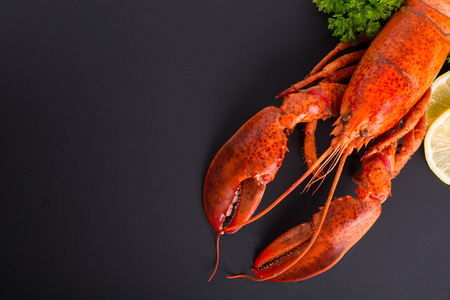
Lobster is often considered to be the king of crustaceans and is thus an expensive delicacy. It has firm, white meat which is succulent and sweet.
When raw it has a dark blue-green colour which turns a bright orange-pink when cooked. There are three main types of lobster: Canadian or American; European; Slipper or Squat lobster from warmer oceans. These are sometimes called ‘bugs’ in Australia and are generally not found in Europe. Given that the flavour is thought to be better according to how cold the water is, the European lobster – caught around the coasts of Britain, Ireland, Norway and Brittany – is considered to have the best flavour.
The most humane way to kill a lobster is to put it in the freezer for a couple of hours. This will render it unconcious. You then insert a very sharp knife into the cross at the back of its head. This kills it instantly, and you can then proceed to cut it in half lengthways and steam or grill it.
Favourite lobster recipes include Lobster Newberg and Lobster Thermidor. It’s also popular in soups, eg bisques. ‘Surf and turf’ is another option where seafood is served alongside red meat, usually lobster and steak. This is popular in North America and Australia but has not really caught on much in Britain.
Absinthe is an unsweetened green liqueur with a taste of anise, flavoured with botanicals, primarily oil of wormwood. The oil is bitter, and contains the poison thujone – which has led to absinthe’s notoriety.
The drink became very popular in France in the 19th century, but it is said that many suffered from hallucinations, seizures, or death from excessive drinking of absinthe. It was banned in many countries. Absinthe can be purchased legally in Britain.
Absinthe was typically served by balancing sugar cubes on a special spoon and pouring ice cold water over the sugar cubes into the drink.
Another anise-flavoured drink, pastis, has since taken absinthe’s share of the market. Indeed, a certain Monsieur Pernod purchased the original absinthe recipe in 1797 from its creator, Dr Ordinaire. That drink is also usually served diluted with water, at which time the clear liquid becomes cloudy and opaque.
Absinthe’s reputation in the nineteenth century was akin to that of illegal drugs in the late twentieth century. The painter Manet depicted this in his famous painting The Absinthe Drinker (1859), in which a dejected devotee stares gloomily at the cloudy liquid in his glass.
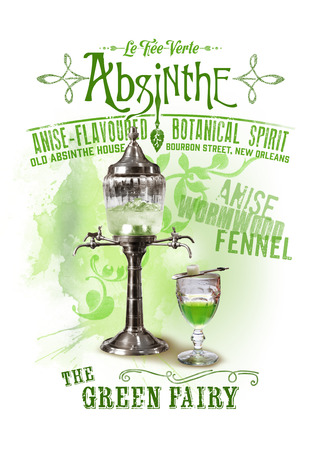
Absinthe has several nicknames, including ‘la verte’ (the green one) and ‘the green fairy’ (a reference to its alleged hallucinogenic properties).
The poster above depicts these many aspects of absinthe.
Gravadlax, also known as gravlax, is a Scandinavian dish consisting of fresh, raw salmon fillet marinated with salt, sugar and dill. Once cured, it’s sliced thinly. It originated as a means to preserve fish in the days before refrigeration. The fish was prepared with salt and dill and then buried in the ground. (‘Grav’ is Swedish for ‘grave’ or ‘pit’. ‘Lax’ is Swedish for ‘salmon’.)
These days it can easily be made at home in the fridge. Using beetroot in the cure has become fashionable and gives the salmon an interesting colour. The Not Delia website has a delicious take on this using a fresh orange, honey and soy sauce.
Foie gras (French: ‘fatty liver’) is a luxury food that seriously divides opinions. It’s hard to think of any more controversial dish that you can eat without breaking the law (but we’ll come back to that below).
Gourmets prize it as the last word in richness and subtlety of flavour. Animal rights activists condemn the barbaric and grotesque manner of its production. Let’s set aside the hype and look at the facts.
Put simply, foie gras is the liver of ducks or geese that have been specially fattened. However, the words ‘specially fattened’ are a bit of a euphemism; the traditional method of fattening (gavage) involves force-feeding the bird through a tube with corn boiled up with fat. This process is carried on for two or three weeks before the bird is slaughtered.
Source: Not Delia: Is foie gras cruel?
Despite the controversy over the production method it’s still a highly sought-after delicacy because of its unique creamy, silky texture and flavour. Goose is usually considered to have a better flavour and a finer texture than duck liver and is the more expensive of the two.
It can be bought whole and raw in lobes, semi-cooked (mi-cuit) or cooked in a paté or mousse.
The production of foie gras is banned in the UK, but as its import or sale is not prohibited it is still possible to buy it from some suppliers, eg Fortnum & Mason. The production is also banned in Australia, several European countries, Argentina, Brazil, Israel, and several US States. In July 2014, India banned the import of foie gras, making it the first and so far only country in the world to do so, causing dismay among some of the nation’s chefs.
Top chef Anthony Bourdain has been a staunch defender of foie gras ever since it was banned in California.