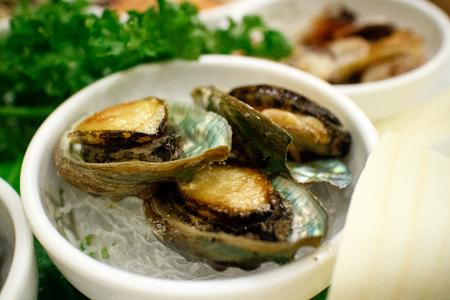
Abalone is a name given to several different species of sea snail. It’s hard to give an exact number because not everyone agrees on the definitions, but there are anything between 30 to over 200 species, ranging in size from small to very large.
The name “abalone” comes originally from the Californian Rumsen language via Spanish. The final E is pronounced, so it’s “a-ba-lo-né”, not “abba-lone”.
Abalone are particularly prized in East and South East Asian cuisine. They were once considered a luxury item in Chinese banquets along similar lines to shark fin soup and bird’s nest soup. In Korea they were often presented to the King.
Nowadays, with the introduction of commercial farming, abalone are more popular. One Western Australian company has set up what it describes as an abalone ranch – an artificial reef consisting of 5,000 concrete blocks weighing 900kg each. The abalone are seeded from an onshore hatchery, taken out to the reef and then left to their own devices.
In North America evidence of abalone consumption along the Californian coast has been dated back to 12,000 years ago. These days you can find abalone on Californian pizzas!
Abalone are also sought after for their shells, the inner surface of which is covered with a particularly iridescent nacre (mother-of-pearl) that’s used in jewellery, button-making and as inlay in furniture and musical instruments.